The energy drink category has traditionally been built around speed, stimulation, and performance—a positioning that works in gymnasiums and convenience stores. But for foodservice operators looking to differentiate and capture evolving consumer preferences, Lotus Plant Power represents a different operational and merchandising model entirely.
As consumer preferences shift toward intentional, plant-based nutrition, foodservice buyers face a clear opportunity: stock products that reflect this demand or risk losing margin to competitors who do. Lotus was built for that operational moment.
Formulation Drives Shelf Position and Velocity
At the center of every Lotus Plant Power drink is Plant Power 7™ (PP7™), the brand's proprietary blend of certified organic plant-based ingredients. The formula brings together functional botanicals including green coffee beans, guayusa, green tea extract, coffee fruit, elderberry, Jerusalem artichoke, and ashwagandha KSM-66.
From an operations standpoint, this matters: consumers read labels more closely than they did five years ago, and they look for ingredients they can feel good about. A clean-label energy drink moves faster in premium segments—in cafes, juice bars, upscale gyms, and quick-service restaurants targeting health-conscious dayparts.
That shift has helped create a new era of energy positioning, one that incorporates better ingredients and creates operational separation from commoditized mainstream energy drinks.
Color-Driven Packaging Simplifies SKU Management
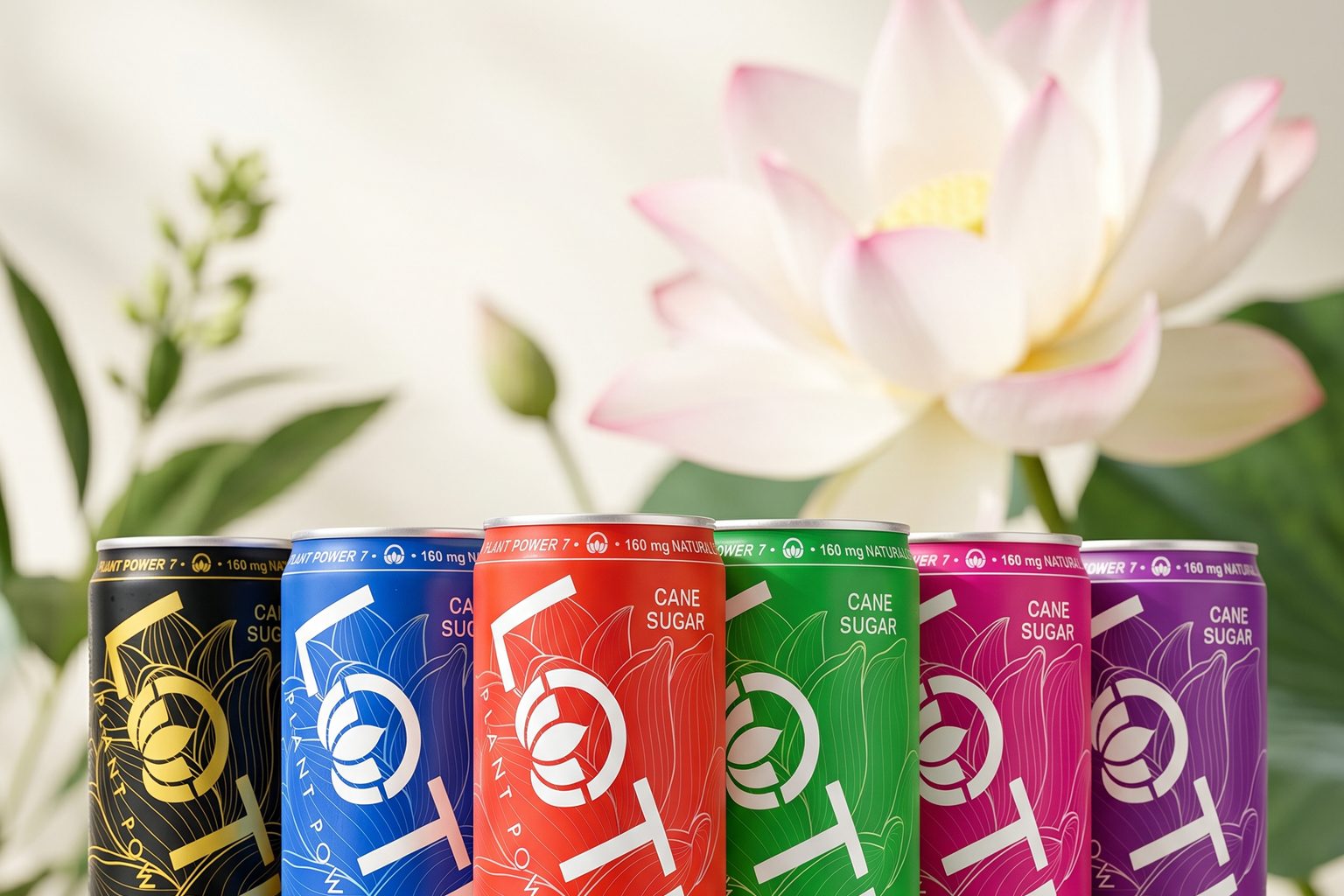
The timeless philosophy of the lotus flower became the inspiration for the brand's distinctive color-driven packaging system. Rather than building packaging around specific flavors—where one can is watermelon, another is cherry lime, another is tropical citrus—Lotus treats colors as part of a larger visual language.
Pink Lotus. Blue Lotus. Green Lotus. Red Lotus. Purple Lotus. Gold Lotus.
For foodservice operators, this approach solves a real operational problem: maintaining consistent packaging architecture across a growing flavor portfolio without creating visual chaos on the shelf or in the cooler. The system is vibrant and distinctive without requiring completely different visual identities for every flavor launch.
In a category where packaging often changes dramatically with every flavor launch, Lotus has created a more enduring system that simplifies procurement, inventory tracking, and point-of-sale messaging.
Packaging Design Drives Trial and Repeat Purchase
Great packaging does more than communicate information. It creates competitive shelf position and influences purchase behavior.
Lotus was designed to deliver a premium beverage experience—something a consumer wants to hold, photograph, and carry. The approach has resonated with industry leaders, earning recognition for packaging design and shelf presence within one of the most competitive categories in beverage.
For operators, this translates to higher basket velocity: products that feel intentional and aspirational drive trial among customers willing to pay premium margins. The result is not just incremental volume—it is profitable volume.
Philosophy and Function Align for Operators
The color philosophy behind Lotus is rooted in the symbolism of the lotus flower itself—balance, vitality, and growth. That same philosophy influences how the brand thinks about formulation and positioning.
The brand draws inspiration from the relationship between color, energy, and self-expression, while keeping the consumer experience modern, accessible, and mainstream. Many consumers have come to refer to it as the Lotus Glow™—the idea that energy is more than a feeling. It is reflected in how people connect, create, move, and express themselves throughout the day.
For ingredients, PP7™ creates the foundation. For the experience, the color system creates the identity. For operators, both elements working together create a positioning that drives repeat purchase and premium pricing.
By combining plant-powered ingredients with a color-driven packaging system, Lotus connects what is inside the can with how consumers express themselves. For foodservice operators, that connection translates to margin, velocity, and competitive differentiation in a category that rewards both innovation and operational clarity.