The 45th parallel runs through Bordeaux and Piedmont—the gold standard wine regions that have shaped the global wine trade for centuries. It also cuts straight through northwest Michigan. And if you haven't been paying attention to the Traverse Wine Coast as a sourcing opportunity, that's about to change.
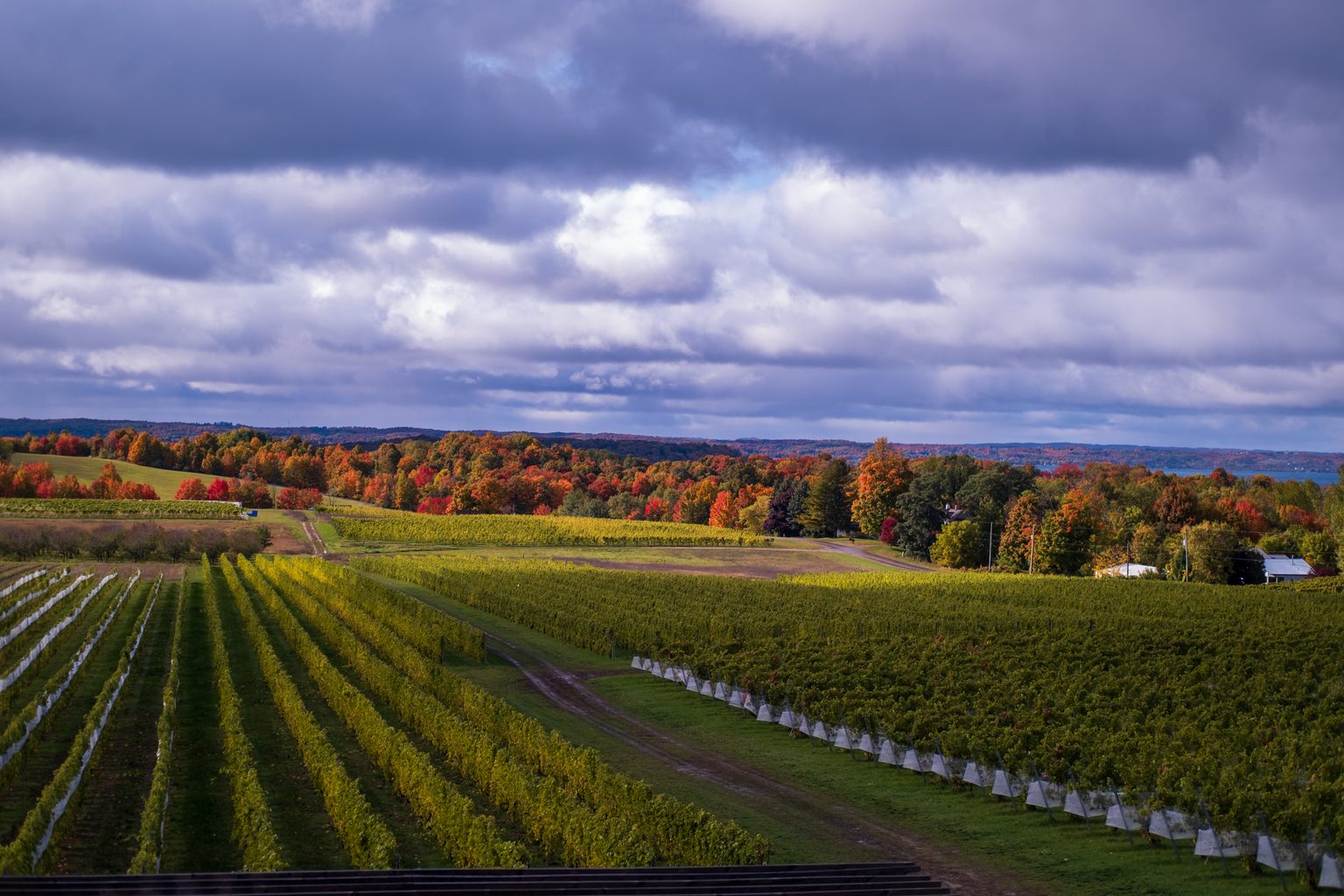
The region encompasses the wineries of the Leelanau and Old Mission Peninsulas, two distinct landmasses in northwest Michigan shaped by glacial movement and buffered by Lake Michigan and Grand Traverse Bay. That water moderates temperature, softens frost risk, and stretches the growing season—translating to consistent, high-quality production that matters for your wine program sourcing and menu stability.
Operational Geography and Logistics
Location is operational efficiency. The Traverse Wine Coast sits within a five-hour drive of Chicago and connects to major cities through over twenty direct flights. For foodservice buyers managing inventory logistics and supplier relationships, this accessibility reduces delivery times and freight costs compared to coastal wine regions. The region is more accessible than it appears on a map, making it a practical addition to your sourcing strategy.
Consistent Product Quality from Two Peninsulas
Old Mission Peninsula, nineteen miles long and flanked by water on both sides, produces well-drained sandy soils that yield Cabernet Franc of surprising elegance, Gewurztraminer that leans floral without tipping into excess, and sparkling wines with the kind of tension that works across diverse menu applications. On the Leelanau Peninsula, glacial soils produce Riesling that could embarrass German producers, alongside Chardonnay and Pinot Noir that earn comparison to cooler-climate Burgundy. For operators building wine programs, these are reliable, differentiated products with verifiable provenance.
Direct-to-Operator Relationships and Fulfillment
Most Traverse Wine Coast wineries ship directly. The ones that don't will connect you to distributors who do. This flexibility in distribution channels—direct ordering, wholesale partnerships, or hybrid models—gives your operation options that align with your inventory management and cash flow requirements. The region's producers understand foodservice and hospitality needs, not just direct-to-consumer tourism.
Growing Event Infrastructure and Partnership Potential
This August, the region hosts the second annual Traverse City Food & Wine Event, drawing James Beard-recognized chefs and the wines of both peninsulas across farm settings. For operators planning special events, wine dinners, or menu collaborations, the region offers chef partnerships and venue infrastructure that enhance your culinary positioning. The farm-to-table infrastructure here supports both sourcing and experiential programming.
The comparison to Napa or Sonoma is inevitable. But those regions are finished stories, known quantities. The Traverse Wine Coast is still being written—which means pricing is more favorable, producer relationships are more accessible, and you have the opportunity to build differentiation before the region becomes a commodity. Most wineries are actively looking to establish foodservice partnerships.
Traverse Wine Coast spans the Leelanau and Old Mission Peninsulas in northwest Michigan. For sourcing and partnership information, visit traversecity.com/traverse-wine-coast.