From a Seattle kitchen experiment a decade ago to presence in over 30,000 stores nationwide—including Walmart, Costco, Starbucks, and Amazon—SkinnyDipped's operational scale tells an important story for foodservice buyers and operators managing growth and standardization across complex distribution networks.
Val Griffith and Breezy Griffith, the mother-daughter founders, built their company on a non-negotiable operational principle: quality at scale. "From day one, quality was non-negotiable," Val says. "If it didn't taste exceptional, it didn't make the cut. That philosophy has guided every decision we've made."
Manufacturing and Execution at Scale
The company's growth trajectory accelerated when national retailers like Target came calling early on, forcing rapid scaling of manufacturing, packaging, and distribution operations. Rather than compromise on standards during this critical period, SkinnyDipped doubled down on process discipline. "Execution came from doing, not overthinking," Breezy explains. "We learned on the fly figuring out manufacturing, packaging, and distribution step by step."
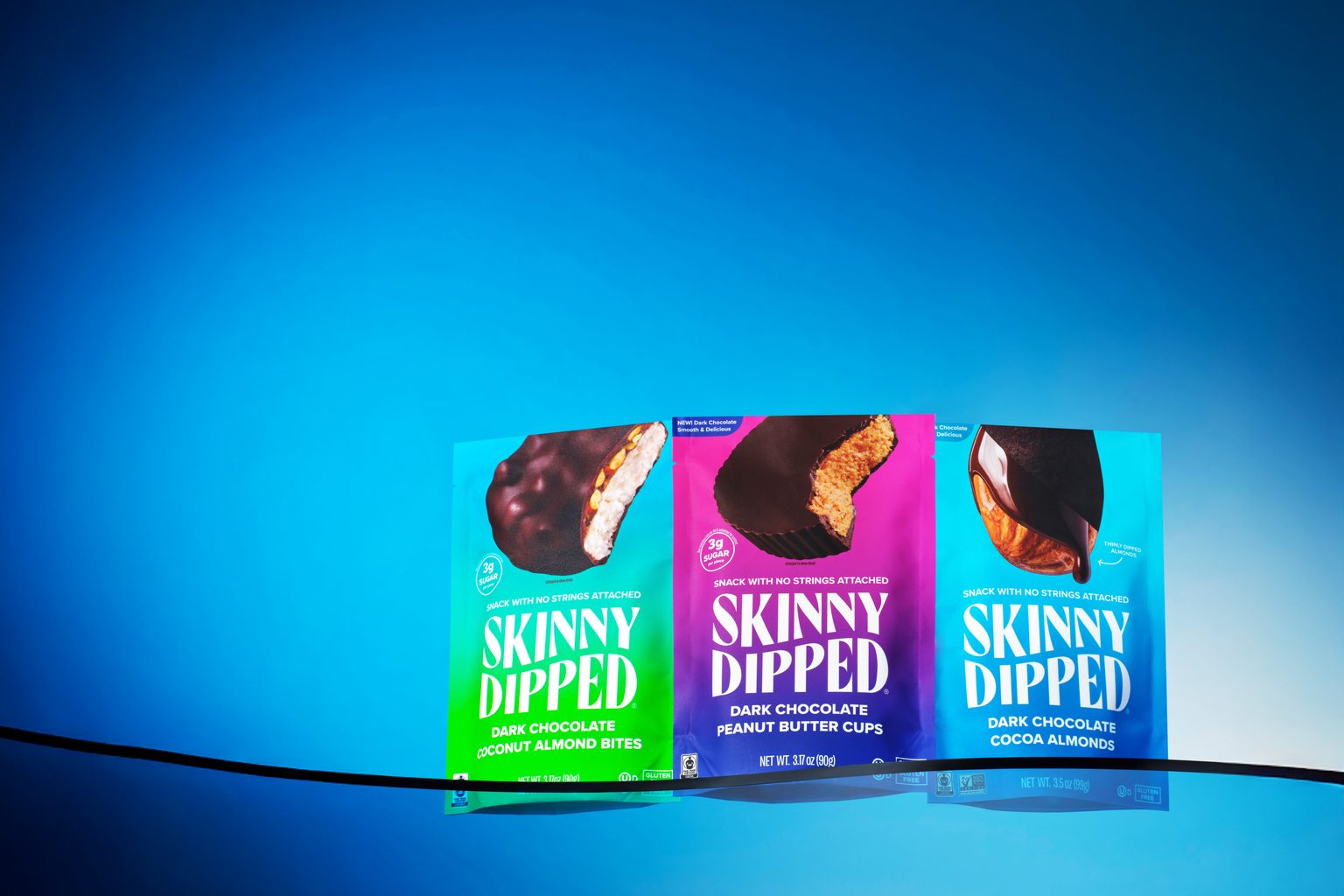
The operational backbone supporting their product line—now 21 SKUs including the original thinly dipped almonds, Dark Chocolate Peanut Butter Cups, and Dark Chocolate Coconut Almond Bites—reflects intentional supply chain decisions. "We've turned down opportunities that didn't align with our standards," Breezy notes. "It's tempting to cut corners when you scale, but we've always believed that trust with the consumer is everything. Once you lose that, you lose the brand."
Operational Decision-Making and Staffing
Managing back-of-house operations across mother-daughter leadership required clear role definition. "We've learned to trust each other's strengths, so whoever is closest to the decision typically takes the lead," Val explains. This fluid but grounded approach to operational responsibility helped them navigate competing priorities during periods of accelerated growth.
The company enlisted family and friends early as quality-control taste-testers—a practice that continues today—establishing a systematic foundation for ingredient evaluation and product consistency across production runs and SKU variations.
Sourcing and Ingredient Standards
Central to their operational philosophy is ingredient integrity. When they couldn't find a satisfying sweet snack in the grocery store that wasn't filled with sugar or unnecessary additives, they built sourcing and production protocols to deliver exactly that. "We wanted to build the product and brand we wish existed," Breezy explains. "We saw a gap in the market when we couldn't find a satisfying sweet snack in the grocery store that wasn't filled with sugar or junk. We set out to create exactly that."
As they look ahead, the operational landscape is shifting. "There's been a huge shift toward transparency and better-for-you options," Breezy says. "The bar is higher now, which we think is a good thing. We're expanding in ways that stay true to our roots but go beyond the candy and nut aisle."
The operational foundation that sustains their growth across 30,000+ locations boils down to three guiding principles. "We stay relentlessly focused on quality, innovation, and purpose," Val concludes. "Those three pillars keep us grounded and differentiated."