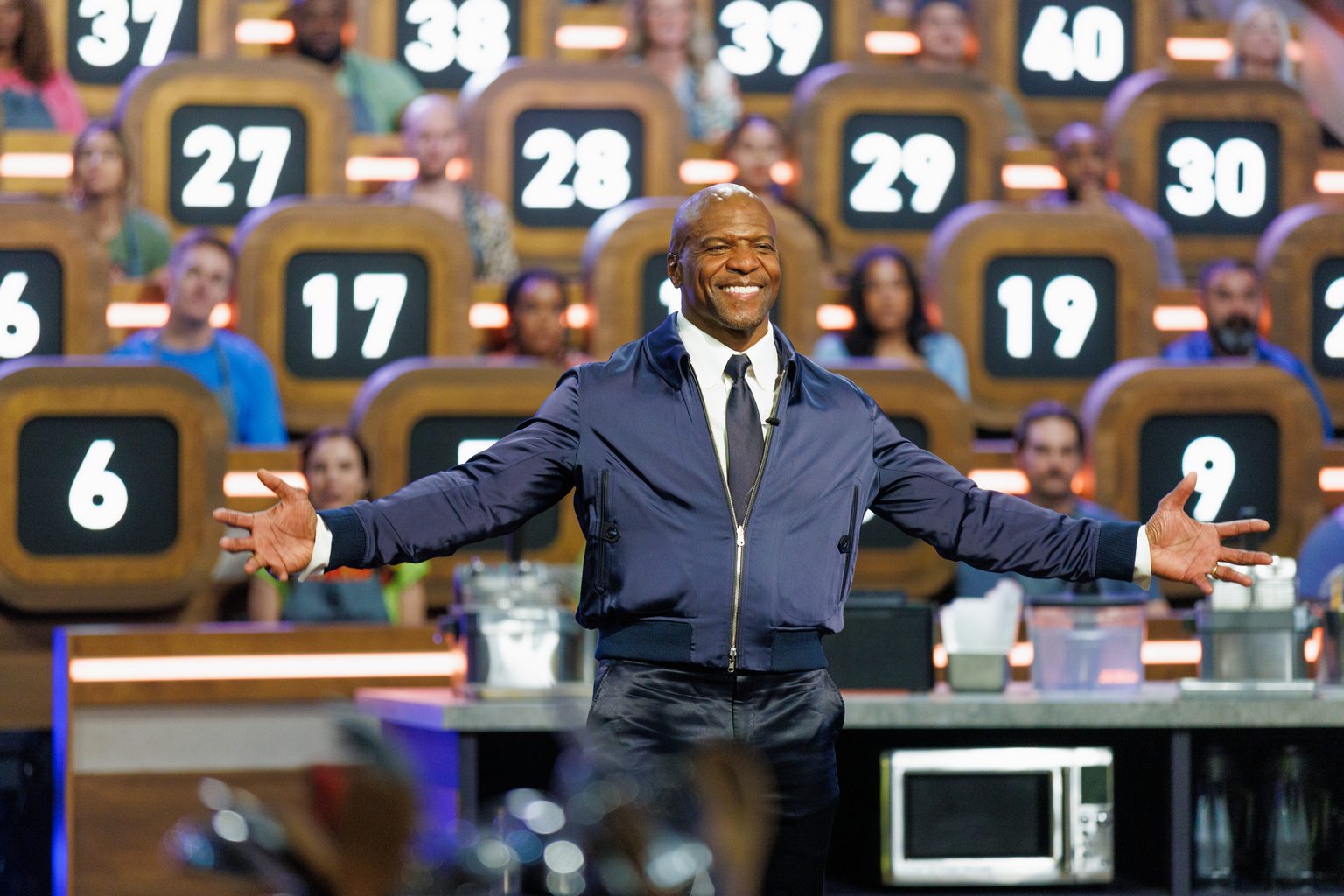
Food Network premiered 100 Cooks on June 7, offering foodservice operators and equipment buyers a rare behind-the-scenes look at the operational complexities of hosting 100 simultaneous competitors in a single arena kitchen. The show features 100 of America's most talented home cooks competing in a massive kitchen environment, facing high-pressure challenges, creative twists, and real-time operational demands that mirror the speed and coordination required in high-volume commercial kitchens.
At the center of production is host Terry Crews, whose larger-than-life personality anchors the show's narrative. Yet even with a resume as impressive as his, Crews says 100 Cooks immediately felt special. "I am a huge fan of the whole Food Network," Crews said. "I keep it on in the background all the time. Watching people make and enjoy food is one of the most satisfying things. I actually thought I was going to go to culinary school at one point…it's an art."
What separates 100 Cooks from other cooking shows is its singular focus on home cooks rather than trained culinary professionals. The contestants come from every corner of American life—teachers, firefighters, lawyers, college students, parents, and countless others united by a shared love of cooking. This diversity becomes critical from an operational standpoint: the show must accommodate 100 different skill levels, cooking styles, and equipment preferences simultaneously in one arena kitchen, requiring sophisticated station design, equipment placement, and workflow management that mirrors the operational planning needed in large banquet facilities and high-capacity commissaries.
More importantly, Crews observes that home cooks bring different demands to kitchen operations than professional chefs. "Being a home cook is different from being a chef," Crews explained. "Chefs often tell you what's good, whereas home cooks find out what you love. They are all about pleasing their guests and have a heart focused on feeding and nourishing people. They don't care about the money. They just want to watch others enjoy themselves."
That operational reality—100 simultaneous competitors, each working independently—transformed the competition into a logistical challenge more complex than viewers might expect from a high-stakes elimination series. The arena kitchen setup required careful engineering to prevent bottlenecks, ensure equitable access to shared equipment, and maintain food safety and sanitation standards across all workstations.
Back-of-House Coordination Under Extreme Pressure
Amidst the competitive drama, 100 Cooks delivers intense challenges designed to test creativity, adaptability, and skill under pressure—all executed within tight timeframes that demand efficient equipment use and station management. One challenge tasked contestants with reimagining the humble rotisserie chicken, a staple found in grocery stores across America. What sounds simple quickly became an exercise in innovation requiring coordinated use of shared cooking equipment. The challenges reveal an important operational truth about what separates functional kitchen design from exceptional facility management. Technical skill matters, but resourcefulness and efficient equipment utilization often matter more.
"A great home cook takes whatever is in the refrigerator and makes a masterpiece," Crews said. "They are able to work with whatever they're given and use their creativity to craft delicious meals." Those qualities proved critical as contestants navigated food trivia, timed cooking battles, and unexpected twists that pushed them to work faster and more efficiently. For operators watching, the show demonstrates real-world pressure testing on kitchen systems and equipment configurations.
Crews admitted to getting invested in the outcomes. "I tend to get very invested. Every time someone had to go home, my heart broke," said Crews. "These are some of the sweetest, most beautiful people. And this is their dream."
Judging Standards and Operational Feedback
The evaluation process relies on two of the food world's most recognizable personalities: Iron Chef Alex Guarnaschelli and culinary YouTube creator Nick DiGiovanni. The pairing creates a balanced assessment approach that mirrors how professional kitchen standards are typically evaluated. Nick comes from a very technical background, whereas Alex comes from a much more emotional place. Together, they made a great team. Their differing approaches often led to a more comprehensive evaluation of the cooks' performances.
At the end of the day, 100 Cooks provided the contestants with constructive feedback. The judges also bring educational value that extends beyond the competition itself. For foodservice operators, such evaluation frameworks—blending technical precision with practical execution standards—are essential for maintaining kitchen consistency and staff development. While viewers tune in for entertainment, the judging methodology itself offers insights into quality control and performance benchmarking applicable to foodservice operations.
"This is quality television that families can enjoy together," stated Crews. "The audience will learn things that change the way people cook. Just because something has been passed down for generations doesn't make it right. The best entertainment is when you gain some educational insight without even trying."
Large-Scale Kitchen Operations and Facility Demands
At a time when food production and service demand continues to increase, 100 Cooks arrives as a practical case study in managing high-volume kitchen operations. The show demonstrates the operational realities of coordinating 100 simultaneous food-prep activities, managing shared equipment access, maintaining sanitation standards, and executing timed service across multiple independent workstations—challenges directly applicable to catering operations, central commissaries, and high-capacity institutional kitchens.
For Crews, the broader operational significance is part of what makes the series compelling from a foodservice perspective. "Food is a universal language," said Crews. "It's one of the main ways we show people we love and care about them. Just like music, it has the power to take you back to a moment in time." That operational scale and efficiency focus is also why the format offers enormous potential for foodservice professionals studying kitchen design and capacity planning.
He envisions this show being as big as America's Got Talent and to become a worldwide sensation. Can you imagine 100 Cooks Brazil? 100 Cooks Italy? 100 Cooks Mexico? Crews is confident this is just the beginning. His enthusiasm is contagious, and after spending time with the contestants, judges, and operational demands that make up the inaugural season, Crews is convinced audiences are about to discover something special.
Whether viewers tune in for the competition, the cooking techniques, the logistical coordination required, or simply the operational challenges inherent in managing 100 simultaneous kitchens, 100 Cooks delivers genuine insight into food production under pressure.
With all the right ingredients coming together, June 7 may mark the beginning of television's next great food phenomenon—and a masterclass in large-scale foodservice operations.