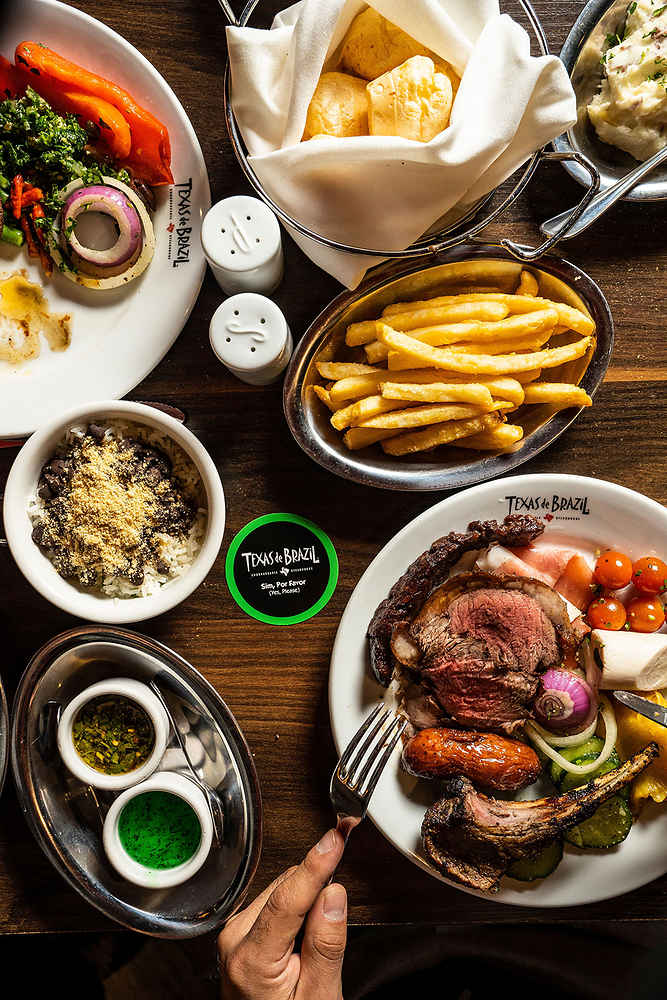
Texas de Brazil has opened its newest location at 140 Spectrum Loop in Colorado Springs, Colorado, planting the rodízio-style steakhouse chain in one of the region's fastest-growing dining and retail corridors. The opening marks a continued build-out of the Dallas-based brand's domestic footprint, which now spans more than 50 U.S. locations.
The Kitchen Behind the Concept
The churrasco format that defines Texas de Brazil is inherently equipment-intensive. Gaucho service relies on wood-charcoal fire systems capable of sustaining continuous, high-volume output across beef, lamb, pork, chicken, and Brazilian sausage — a production model that demands serious ventilation capacity, robust rotisserie or spit infrastructure, and holding solutions that keep proteins at carving temperature throughout multi-hour dinner services. Operators and kitchen consultants specifying similar continuous-service steakhouse builds should note the thermal load implications: wood-charcoal cooking generates significantly higher radiant heat and particulate output than gas or electric alternatives, making ventilation system sizing a critical design variable.
The 50-item gourmet salad area — a signature Texas de Brazil feature — compounds the cold-side equipment profile. Running that many simultaneous SKUs of artisan cheeses, cured meats, roasted vegetables, hot items, and Brazilian specialties requires a substantial refrigerated display footprint, likely combining open-well drop-in cold pans, refrigerated base rails, and heated wells for hot bar items. For foodservice equipment dealers and consultants working on similar upscale buffet or salad-bar buildouts, the Colorado Springs unit represents the kind of anchor project worth benchmarking against existing prep-and-storage specifications.
Buildout and Capacity Context
The new restaurant occupies space in the Northgate/Interquest commercial district, described by the brand as one of northern Colorado Springs' fastest-growing destinations for dining, entertainment, and business. The location includes a full-service bar, private dining rooms for corporate and social events, and a dining room positioned for celebrations and business entertaining — a program that requires dedicated private-room A/V and service infrastructure alongside the main production kitchen.
Salim Asrawi, President of Texas de Brazil, cited the community's growth trajectory and appreciation for premium dining as the market rationale. The brand, founded in Addison, Texas in 1998, has built its expansion on a replicable format where the cookline and service choreography are tightly integrated — a model that places consistent demands on equipment vendors and kitchen designers across every new build.
Dinner service runs Sunday through Thursday from 4–5 p.m. to 9 p.m., with extended Friday and Saturday closes at 10 p.m. The full rodízio experience is priced at $58.99 per person, with a salad-area-only option at $33.99 — pricing that reflects the labor and equipment overhead of continuous tableside service at scale.
Written by Michael Politz, Author of Guide to Restaurant Success: The Proven Process for Starting Any Restaurant Business From Scratch to Success (ISBN: 978-1-119-66896-1), Founder of Food & Beverage Magazine, the leading online magazine and resource in the industry. Designer of the Bluetooth logo and recognized in Entrepreneur Magazine's "Top 40 Under 40" for founding American Wholesale Floral, Politz is also the Co-founder of the Proof Awards and the CPG Awards and a partner in numerous consumer brands across the food and beverage sector.