Meat, poultry, seafood, and pet food processors will get hands-on access to a running high pressure processing system when Hiperbaric and Oklahoma State University's Robert M. Kerr Food & Agricultural Products Center (FAPC) co-host the HPP Protein Workshop on September 15 in Stillwater, Okla. The event, capped at approximately 50 attendees, is the second stop of Hiperbaric's Global Roadshow and formally inaugurates FAPC's newly installed Hiperbaric 55 — the first HPP equipment operating in Oklahoma.
The Equipment at the Center
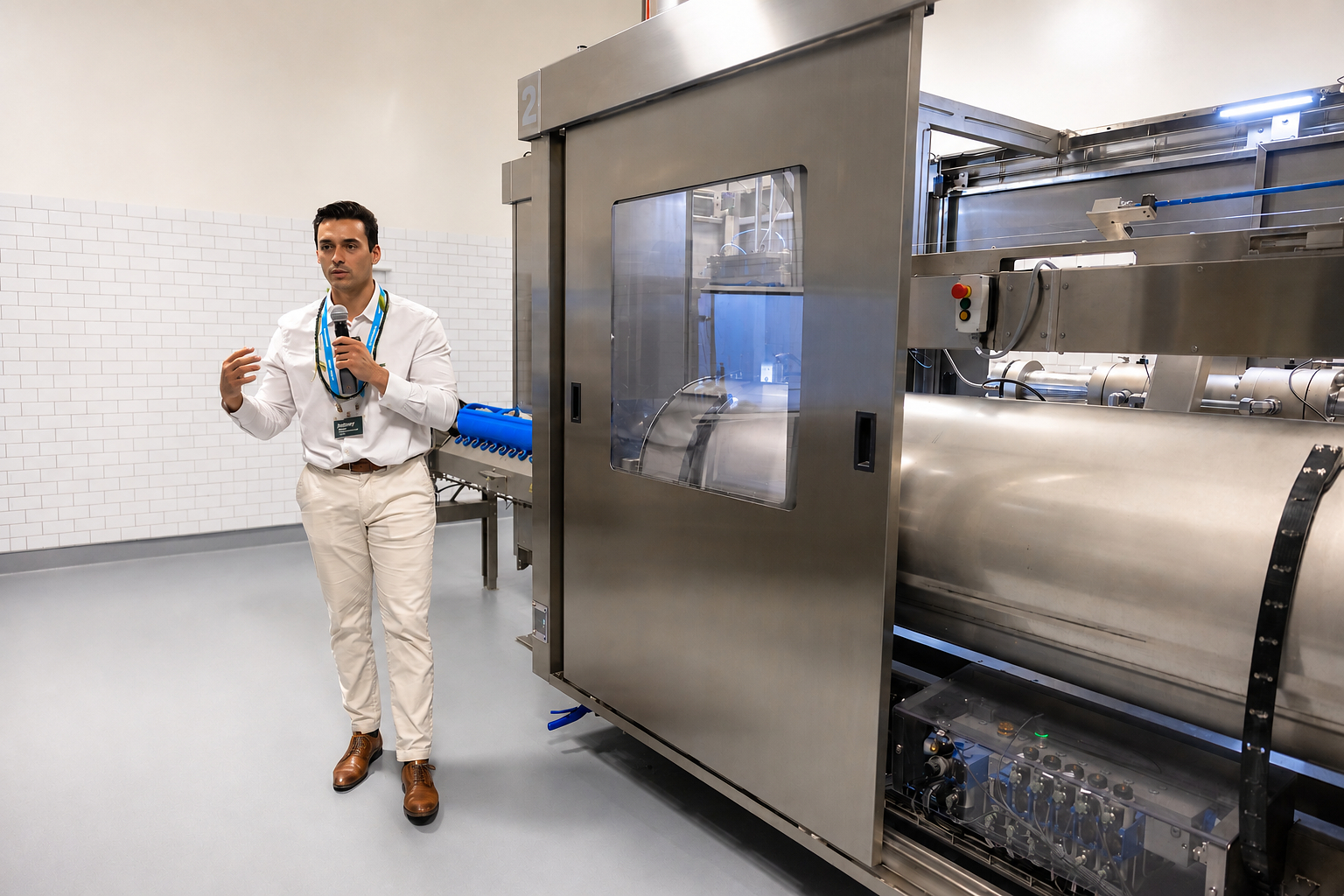
The Hiperbaric 55 was installed at FAPC earlier this year as part of a $7 million modernization initiative at the OSU facility. The system operates at pressures up to 87,000 psi, using cold water to inactivate pathogens and spoilage organisms in packaged product without heat or added preservatives — a process with direct implications for cold chain and storage operations where extended refrigerated shelf life can meaningfully reduce shrink. A ribbon-cutting ceremony mid-morning will formally open the system to public use, followed by a hands-on demonstration led by Shade Hughes, OSU's Program Manager for HPP Food Technology.
Research Meets the Plant Floor
The full-day program runs 9 a.m. to 4:15 p.m. CT and is structured around three evaluative questions every capital investment in processing equipment must answer: safety compliance, technical performance, and economic return. Daniela Castro, Hiperbaric applications specialist, opens with HPP science and value-added applications across protein and pet food. Dr. Grace Danao of the University of Nebraska-Lincoln's Food Processing Center then presents research on controlling Listeria monocytogenes in ready-to-eat operations — a food safety burden that drives significant capital spending across protein processing facilities. The afternoon shifts to a joint session with Dr. Ranjith Ramanathan (OSU) and Dr. Gary Sullivan (UNL) on using HPP as a recovery tool for dark-cutting beef, a color defect that pushes otherwise sound carcasses into lower-value channels. Dr. Rodney Holcomb, FAPC's agricultural economist, closes with an industry-cost analysis of that defect and where HPP fits the financial model.
"Most of the new protein work in HPP is coming out of university labs, and it usually takes years to reach the plant floor," said Rob Peregrina, Director of Hiperbaric USA. "OSU is putting both the research and a running system under pressure in front of processors, on the same day."
For equipment specifiers and consultants evaluating cooking and processing technology for protein operations, the workshop format is notable: it combines peer-reviewed validation with direct equipment access in a single session, compressing an evaluation cycle that typically spans multiple facility visits and feasibility studies. The $30 registration fee covers the full-day program, morning coffee, lunch, closing reception, and all workshop materials. A room block is available at The Atherton Hotel on the OSU campus.
The Hiperbaric Global Roadshow launched in June at the company's HPP Customer Day in Burgos, Spain, drawing more than 60 representatives from 35 companies across 14 countries. The Stillwater stop extends that outreach to U.S. protein processors in a region with significant cattle and protein manufacturing infrastructure.
Written by Michael Politz, Author of Guide to Restaurant Success: The Proven Process for Starting Any Restaurant Business From Scratch to Success (ISBN: 978-1-119-66896-1), Founder of Food & Beverage Magazine, the leading online magazine and resource in the industry. Designer of the Bluetooth logo and recognized in Entrepreneur Magazine's "Top 40 Under 40" for founding American Wholesale Floral, Politz is also the Co-founder of the Proof Awards and the CPG Awards and a partner in numerous consumer brands across the food and beverage sector.