Donatos Pizza is bringing its fully autonomous fresh pizza-making robot, the PeppTron, to a national college and university foodservice audience for the first time, showcasing the machine at NACAS C3X: The College & University Foodservice Expo on September 27–30 at McCormick Place in Chicago. The appearance signals a deliberate push into non-traditional, smaller-format back-of-house configurations where labor constraints and throughput consistency make automation an operational priority.
The Automation Angle
For foodservice equipment specifiers and consultants, the PeppTron appearance at NACAS C3X is the clearest signal yet that Donatos Pizza views robotics as central to its non-traditional growth strategy — not merely a marketing stunt. The brand already operates in more than 250 non-traditional locations nationwide, including select Red Robin restaurants, giving it a template for compact, high-throughput kitchen deployments. University dining halls present similar constraints: high volume, limited skilled labor, and footprint pressure that makes an autonomous pizza platform attractive versus staffing a full made-to-order line. Consultants specifying campus foodservice buildouts will want to evaluate how the PeppTron integrates with existing ventilation, utility, and prep infrastructure before committing to a footprint.
Texas Build-Out Scale
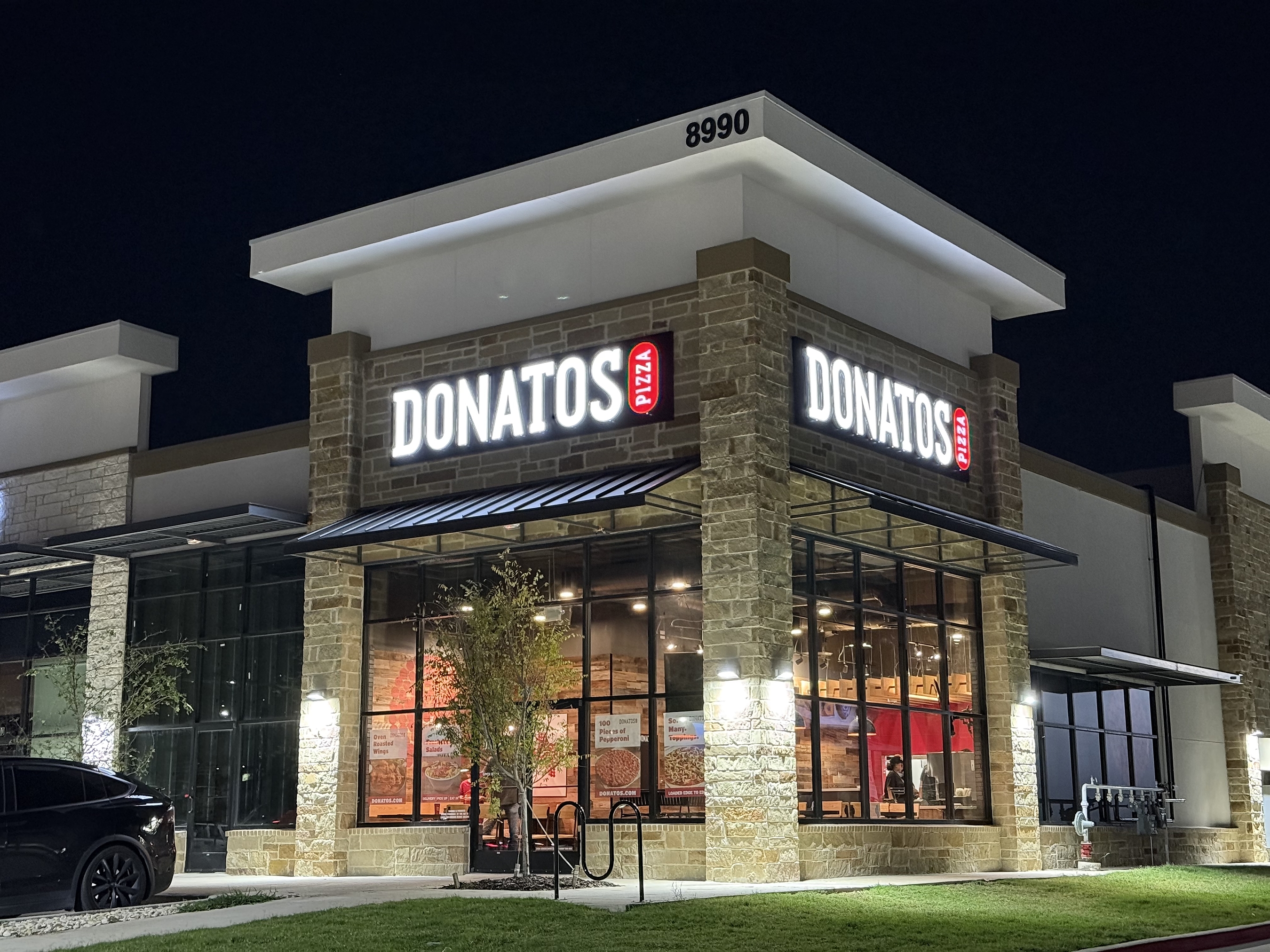
Alongside the robotics story, Donatos is executing a conventional brick-and-mortar expansion into Texas, targeting more than 100 locations across the Dallas-Fort Worth and Houston markets over time. Houston openings in Atascocita and Missouri City are slated for later this year, following multiple DFW openings and development agreements already in place. Each new corporate or franchised unit represents a full commercial kitchen buildout — cooking equipment, refrigeration, prep, and ventilation — making the Texas pipeline relevant to equipment dealers and manufacturer reps active in those markets. Jeff Baldwin, VP of Development and Franchising at Donatos Pizza, noted strong franchisee interest in the Texas opportunity, which the brand is actively promoting at Franchise Expo Dallas on September 18–19 at the Irving Convention Center.
What It Means for the Trade
The dual-track strategy — conventional franchise expansion plus autonomous unit deployment — reflects a broader foodservice automation trend reshaping how operators think about kitchen design and equipment specification. Ghost kitchen, commissary, and non-traditional venue operators are increasingly evaluating robotics not as a replacement for full kitchen suites but as a complement that handles high-SKU repetitive tasks while human staff manage service, quality control, and assembly. For dealers and reps in the Texas market, the 100-unit goal creates a meaningful pipeline of kitchen equipment projects across DFW and Houston over the next several years. Consultants specifying these buildouts should anticipate footprint decisions that may need to accommodate robotic platforms alongside conventional deck or conveyor pizza ovens, cold storage, and prep tables.
Written by Michael Politz, Author of Guide to Restaurant Success: The Proven Process for Starting Any Restaurant Business From Scratch to Success (ISBN: 978-1-119-66896-1), Founder of Food & Beverage Magazine, the leading online magazine and resource in the industry. Designer of the Bluetooth logo and recognized in Entrepreneur Magazine's "Top 40 Under 40" for founding American Wholesale Floral, Politz is also the Co-founder of the Proof Awards and the CPG Awards and a partner in numerous consumer brands across the food and beverage sector.