Most Argentine wine operations assume one model: high-altitude Andean vineyards with predictable dry heat and straightforward ripening cycles. Puerta del Abra, located in Balcarce in Buenos Aires province, inverts those assumptions entirely. Established in 2013 by Jorge Perez Companc and his family, this coastal-influenced estate operates at just over 100 meters elevation, roughly 30 to 50 kilometers from the South Atlantic, creating operational and equipment demands fundamentally different from the country's traditional wine regions.
Climate Control and Equipment Challenges in a Maritime Environment
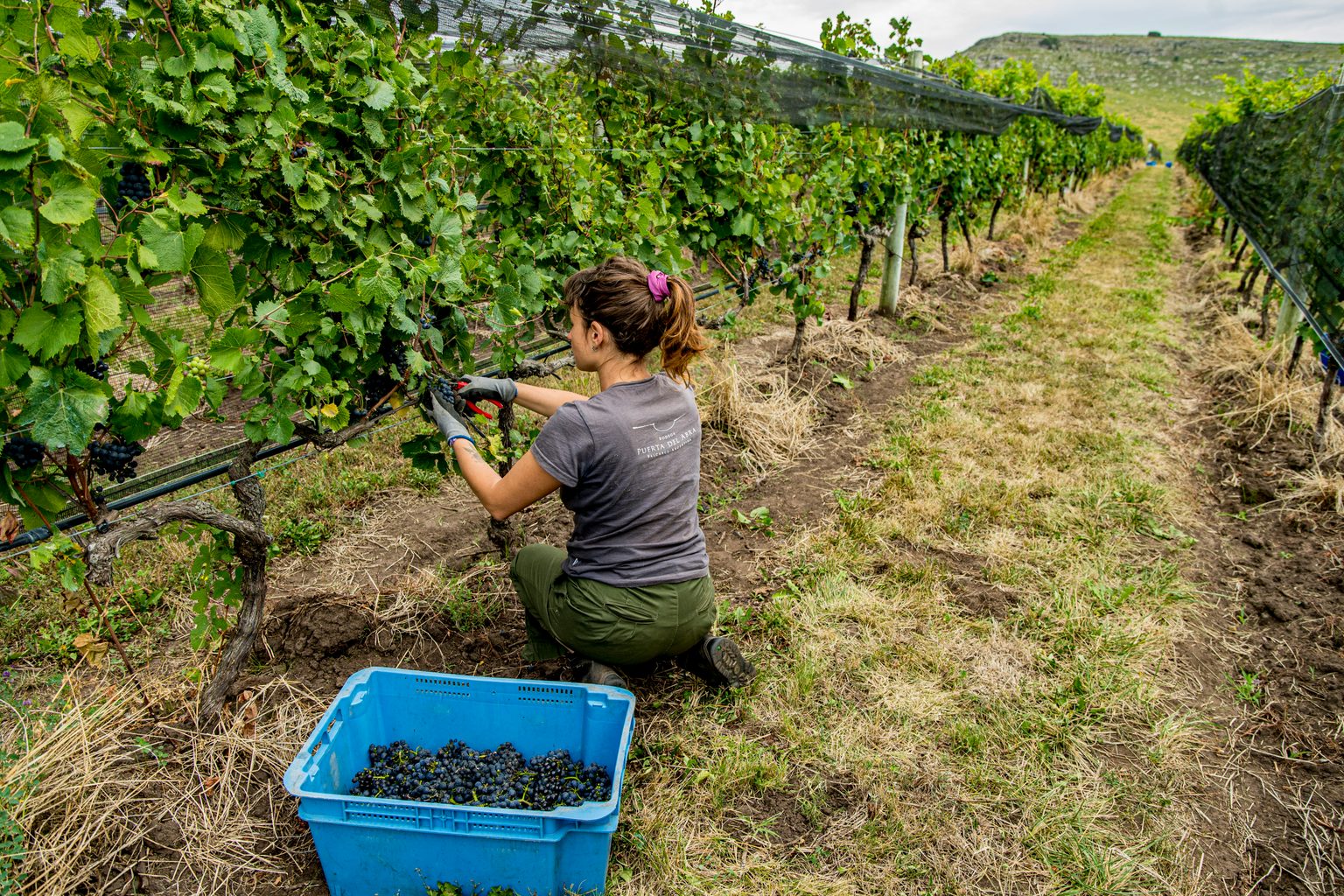
The operational realities at Balcarce begin with climate. Unlike Mendoza or Patagonia's dry, sheltered conditions, Balcarce brings constant Atlantic breezes, significant annual rainfall, frost risk, and cool Winkler II temperatures. The winery responds with specialized equipment: mesh protection on the most exposed vineyard rows, carefully managed drip irrigation systems, and frost-management infrastructure. Cool nights and moderate summer highs slow ripening, keeping alcohol levels in check while preserving acidity—results that demand precise temperature and humidity control inside the cellar, not the passive climate management typical of high-altitude sites.
The team consulted with renowned French soil specialists Lydia and Claude Bourguignon to map the site's composition—a mosaic of clay, limestone, granite, and marine-influenced soils—and design operational systems accordingly. That foundation informs every back-of-house decision, from irrigation scheduling to fermentation vessel placement and cellar climate zones.
Varietal Selection and Production Workflow Implications
Varietal selection at Puerta del Abra diverges sharply from Argentina's Malbec-centric model, with direct equipment implications. The vineyard centers on Chardonnay, Riesling, and Albariño for whites, and Pinot Noir, Cabernet Franc, Bonarda, Tannat, and Merlot for reds. This diversity demands flexible fermentation equipment, separate temperature zones, and varied oak regimens. The Chardonnay undergoes Velo de Flor—a technique closely associated with Jerez—requiring specialized barrel handling and oxidative environment management uncommon in Argentine winemaking. The Riesling's slow ripening necessitates extended harvest windows and staggered crushing capacity. The Pinot Noir, positioned as a still red rather than a sparkling base, demands different pressing protocols and tannin management systems.
Seasonal variability is significant at this location. Each vintage carries a completely different profile based solely on weather conditions, meaning the operation must remain flexible. The winery employs micro-vinifications throughout the season—separate small-lot fermentation vessels that allow the team to identify the most compelling expressions before full-scale assembly into bottled blends. This exploratory workflow requires dedicated micro-fermentation infrastructure, separate temperature monitoring, and lab capacity for frequent tasting and analysis.
Staffing, Training, and Operational Culture
Balcarce had no existing wine labor pool when Puerta del Abra began operations. The estate hired locally and built its own training program from the ground up, meaning internal systems documentation, cross-training protocols, and knowledge management infrastructure were essential from day one. The winemaking team has been female-led since Delfina Pontaroli established the production foundation; today Mariana Boero serves as head winemaker with Deborah as assistant winemaker. This operational structure, rooted in a culture of collaboration and equal opportunity, directly shapes cellar organization, communication flows, and production protocols.
Production Scale and Equipment Constraints
Production remains intentionally modest at 40,000 to 50,000 bottles annually—a constraint that shapes equipment decisions. Most domestic allocation goes to high-end restaurants in Buenos Aires, with California-based import handling US distribution and expansion underway in Spain, France, and further European markets. This modest footprint allows for smaller, more specialized fermentation vessels, hand-bottling or semi-automated lines rather than large-scale packaging infrastructure, and storage systems designed for quality over throughput. Sustainability practices—vegan certification obtained in 2023, lighter bottles, and Good Agricultural and Manufacturing Practices implementation—further inform equipment choices and waste-management systems.
The estate's operational foundation rests on a long-term terroir study approach. Recognition from Decanter, James Suckling, and Global Masters has validated the model, but the focus remains on listening closely to the landscape and investing in people and refined processes. For foodservice equipment buyers and operators expanding their understanding of diverse wine regions and production models, Puerta del Abra demonstrates how coastal, cool-climate conditions demand fundamentally different back-of-house infrastructure, fermentation flexibility, and labor systems than Argentina's traditional Andean-based operations.