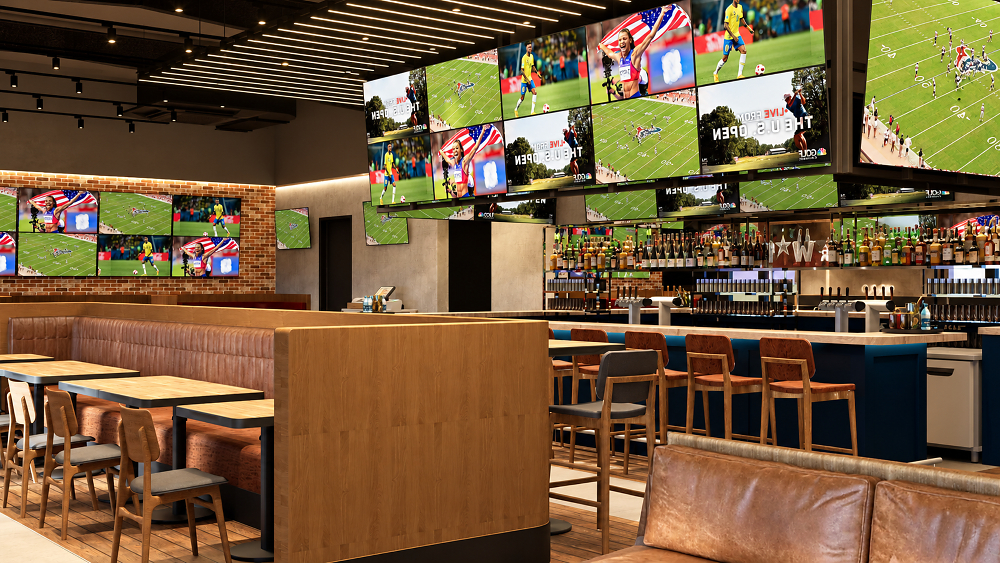
Walk-On's Sports Bistreaux](https://walk-ons.com/) is cutting its restaurant footprint nearly in half with a next-generation prototype that places a redesigned, equipment-forward kitchen at the center of the concept. Interior renderings released October 13 show a 3,500- to 4,500-square-foot format — down sharply from the brand's traditional 7,000- to 8,000-plus-square-foot builds — with the first location slated to open on Perkins Road in Baton Rouge in early 2027 at approximately 3,688 square feet, seating 125 guests.
Kitchen at the Core
The back-of-house redesign is the operational engine behind the smaller box. Walk-On's has specified clamshell grills as a centerpiece of the new equipment package, a choice the brand says is intended to simplify training, improve cook consistency, and reduce ticket times — all without trimming the full Louisiana-inspired menu. For equipment specifiers and dealers working the casual-dining and sports-bar segment, the move signals growing operator demand for high-throughput cooking platforms that perform in tighter line configurations. The cooking equipment implications for compact kitchen buildouts are significant: clamshell technology allows faster cook cycles and reduced labor dependency, two pressure points that are reshaping kitchen design across full-service concepts.
Designed by Madrid-based restaurant design firm Livit, the prototype is built as a flexible "kit of parts," letting franchisees select or add elements based on their specific site, market, and operational preference. That modularity extends to the kitchen layout, meaning equipment configurations can shift while the core menu execution remains consistent — a critical consideration for multi-unit operators and the consultants specifying their builds.
Delivery Infrastructure Built In
The prototype also formalizes third-party delivery pickup as a dedicated infrastructure element. Pickup cubbies positioned near the host stand create a clearly zoned channel for Uber Eats, DoorDash, and other platforms without disrupting front-of-house flow. This kind of purpose-built off-premise infrastructure, increasingly standard in new ghost and commissary kitchen buildouts, is now migrating into full-service casual dining prototypes as delivery volumes remain elevated post-pandemic.
Walk-On's noted the prototype draws on real-world data from its 3,700-square-foot inline location at The Battery in Atlanta, which demonstrated the brand could execute its full menu and sports-bar experience at compressed scale. That proof-of-concept is now being codified into a purpose-built prototype franchisees can deploy more broadly, including in inline strip-center and urban end-cap configurations previously inaccessible at the legacy footprint.
Beyond the kitchen, the design features a peninsula-style bar, a flexible lounge area for game-day groups, localized community wall graphics, and an outdoor patio TV wall. CEO and co-founder Brandon Landry framed the redesign as preserving brand identity while unlocking new real estate opportunities: "The new design gives our franchisees more flexibility in where and how they build, while keeping the energy, hospitality and community connection our guests know and love."
With more than 80 locations currently operating and active franchise development across the country, Walk-On's next-gen prototype is positioned to accelerate growth in markets where large-format end-caps were previously cost-prohibitive or unavailable.
Written by Michael Politz, Author of Guide to Restaurant Success: The Proven Process for Starting Any Restaurant Business From Scratch to Success (ISBN: 978-1-119-66896-1), Founder of Food & Beverage Magazine, the leading online magazine and resource in the industry. Designer of the Bluetooth logo and recognized in Entrepreneur Magazine's "Top 40 Under 40" for founding American Wholesale Floral, Politz is also the Co-founder of the Proof Awards and the CPG Awards and a partner in numerous consumer brands across the food and beverage sector.