What Changed
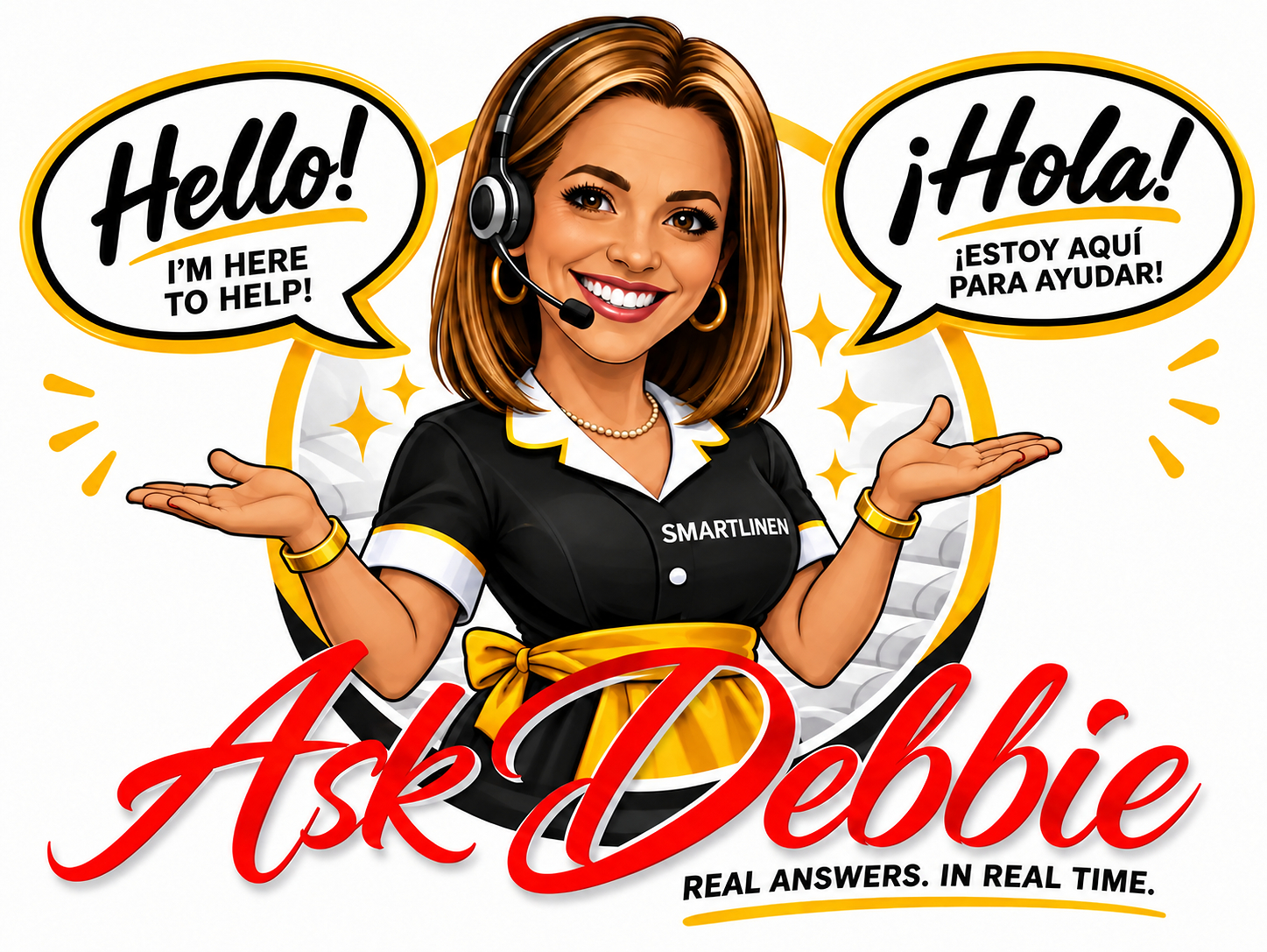
SMARTLINEN® has added interactive voice capability to Ask Debbie, its AI-powered linen management assistant, enabling hotel housekeeping and laundry staff to query live inventory data through spoken conversation in both English and Spanish. The update also extends bilingual access across the full SMARTLINEN® Portal, allowing different team members to work within the same platform simultaneously — one in English, one in Spanish — pulling from a single shared dataset.
Before the upgrade, users had to navigate software screens and run reports to answer operational questions. Now a housekeeping manager can ask aloud, "Debbie, how many bath towels have not returned from the laundry?" and receive a verbal answer in real time. A recreation manager can ask about pool towel inventory ahead of peak demand. The system interprets the spoken question, analyzes the property's live SMARTLINEN® data, and responds verbally — no typing, no screen navigation required.
Back-of-House Implications
For large hotel operations with multilingual housekeeping and laundry teams, the bilingual voice interface addresses a persistent friction point: staff who are more comfortable in Spanish have historically needed a bilingual supervisor to extract data or had to work through an English-only interface. SMARTLINEN®'s approach — a single platform, single real-time data feed, two languages — removes that translation layer at the operational level. The practical result is faster inventory decision-making on the laundry floor and in the linen room, where delays in tracking par stock, soiled returns, or circulation rates translate directly into service gaps.
Textile management in commercial hospitality shares workflow logic with linen and ware-handling systems in high-volume foodservice environments, where tracking inventory through a production cycle — from use to cleaning to restock — is a recognized ware-handling and cold-chain operational discipline. Operators specifying back-of-house systems for commissary or large institutional kitchens increasingly face similar multilingual workforce considerations.
Platform Direction
"The objective is simple: make information accessible through the most natural interface available — conversation," said William Serbin, President and CEO of SMARTLINEN®. "Instead of requiring employees to search through reports, navigate software and analyze data, we are giving them the ability to simply ask a question and get an answer in real time."
The voice and bilingual update reflects a broader push by hospitality technology vendors to reduce the interface burden on hourly workers, a trend also visible in foodservice automation and kitchen management platforms targeting prep, dishroom, and storage operations. For equipment consultants and operators specifying integrated back-of-house management systems, the convergence of AI-driven analytics, voice UI, and multilingual access is becoming a baseline expectation rather than a premium feature.
Written by Michael Politz, Author of Guide to Restaurant Success: The Proven Process for Starting Any Restaurant Business From Scratch to Success (ISBN: 978-1-119-66896-1), Founder of Food & Beverage Magazine, the leading online magazine and resource in the industry. Designer of the Bluetooth logo and recognized in Entrepreneur Magazine's "Top 40 Under 40" for founding American Wholesale Floral, Politz is also the Co-founder of the Proof Awards and the CPG Awards and a partner in numerous consumer brands across the food and beverage sector.