Founded on November 11, 1946, The RK Group has grown from a neighborhood diner on San Antonio's West Side into one of the country's largest privately held contract foodservice and event-services enterprises, now operating across seven U.S. markets with more than 1,100 team members and 15 integrated specialty brands.
Convention Center Roots
The company's back-of-house credentials run deep. RKG has held the exclusive catering and concessions contract at the Henry B. González Convention Center in San Antonio since 1971 — a tenure of more than 50 years that covers the full spectrum of large-scale foodservice operations, from high-volume banquet production to daily concessions. CEO and President Greg Kowalski, who himself served as General Manager of Food and Beverage Operations at that same convention center before joining RKG in 1993, credits the venue relationship with shaping the company's approach to institutional-scale culinary programming. The same model has since been replicated at the Renasant Convention Center and Cannon Center for the Performing Arts in Memphis, and the Kentucky Derby Museum in Louisville — all facilities where RKG manages the full foodservice and event-production footprint.
For equipment specifiers and foodservice consultants working on convention and performing-arts venue projects, RKG's operational model is worth studying. The company maintains company-owned equipment inventory and executes large-scale fabrication and experiential design in-house, reducing dependence on third-party rental fleets and enabling rapid deployment for contingency and mobile catering programs — a capability increasingly relevant as operators expand into temporary and outdoor event formats.
Footprint and Operations
RKG's current footprint spans offices and operations in San Antonio, Austin, and Dallas, TX; Phoenix, AZ; Louisville, KY; Memphis, TN; and Seattle, WA. The company's integrated service stack includes event production, catering, contingency mobile programs, temporary structures, and large-scale fabrication — all supported by its in-house inventory. That vertically integrated model, where a single operator controls the kitchen equipment fleet, the culinary program, and the physical event infrastructure, has become a competitive differentiator as convention centers and performing-arts venues seek to consolidate vendor relationships and reduce operational complexity.
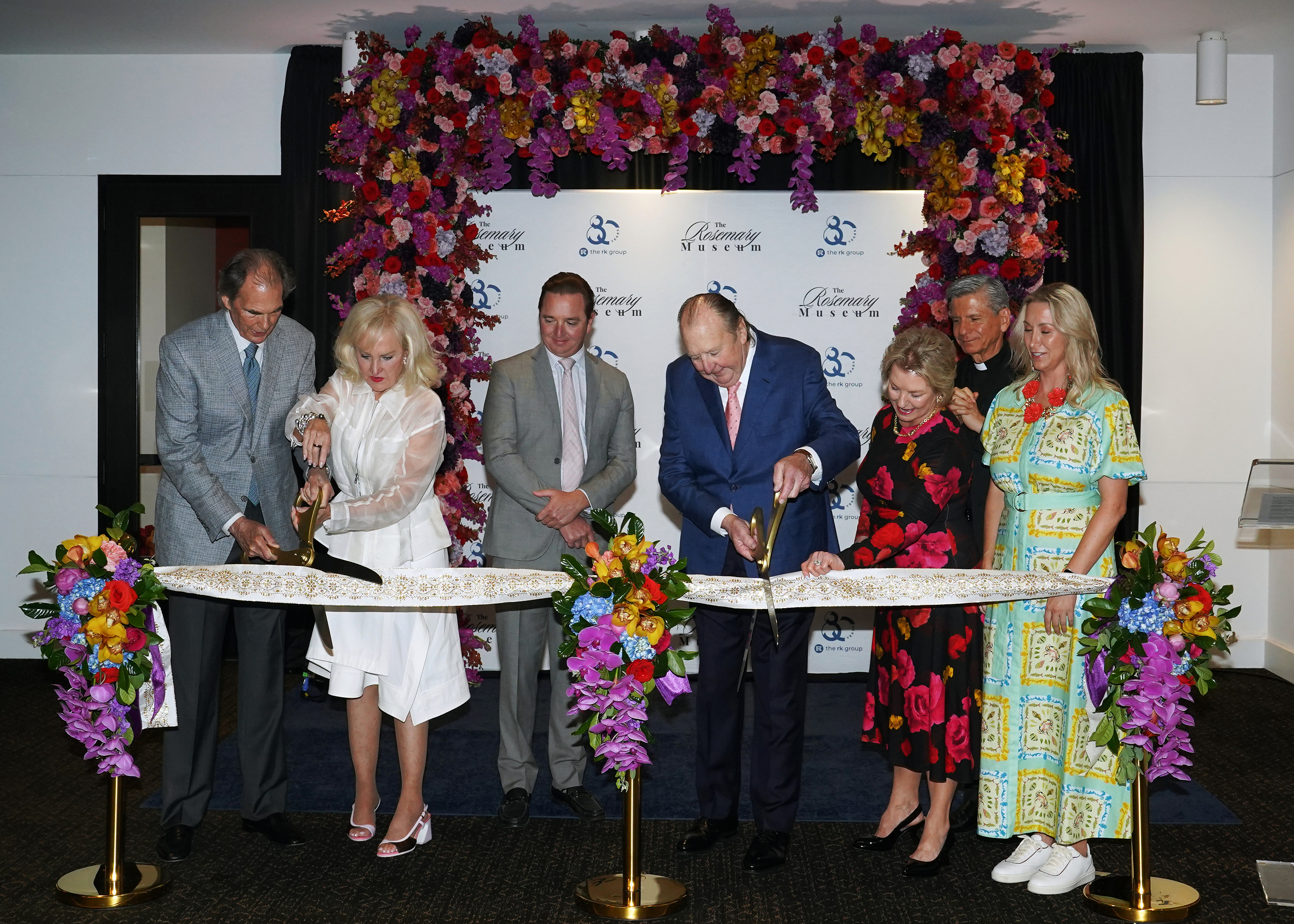
The 80th anniversary milestone was marked with the opening of The Rosemary Museum at the company's San Antonio headquarters, honoring late founder Rosemary Kowalski (1924–2024). The exhibit — including custom fabrications, displays, and an interactive digital avatar — was executed entirely in-house, a demonstration of the same fabrication capabilities RKG deploys for large-scale event builds. With a third generation of the Kowalski family now in key administrative and strategic planning roles, the company signals continued expansion into new markets and programming formats.
For operators and equipment dealers tracking large-venue foodservice contracts, RKG's eight-decade run at convention-scale operations represents a benchmark in sustained back-of-house management — one built on proprietary equipment assets, multi-unit culinary standardization, and deep venue partnerships.
Written by Michael Politz, Author of Guide to Restaurant Success: The Proven Process for Starting Any Restaurant Business From Scratch to Success (ISBN: 978-1-119-66896-1), Founder of Food & Beverage Magazine, the leading online magazine and resource in the industry. Designer of the Bluetooth logo and recognized in Entrepreneur Magazine's "Top 40 Under 40" for founding American Wholesale Floral, Politz is also the Co-founder of the Proof Awards and the CPG Awards and a partner in numerous consumer brands across the food and beverage sector.