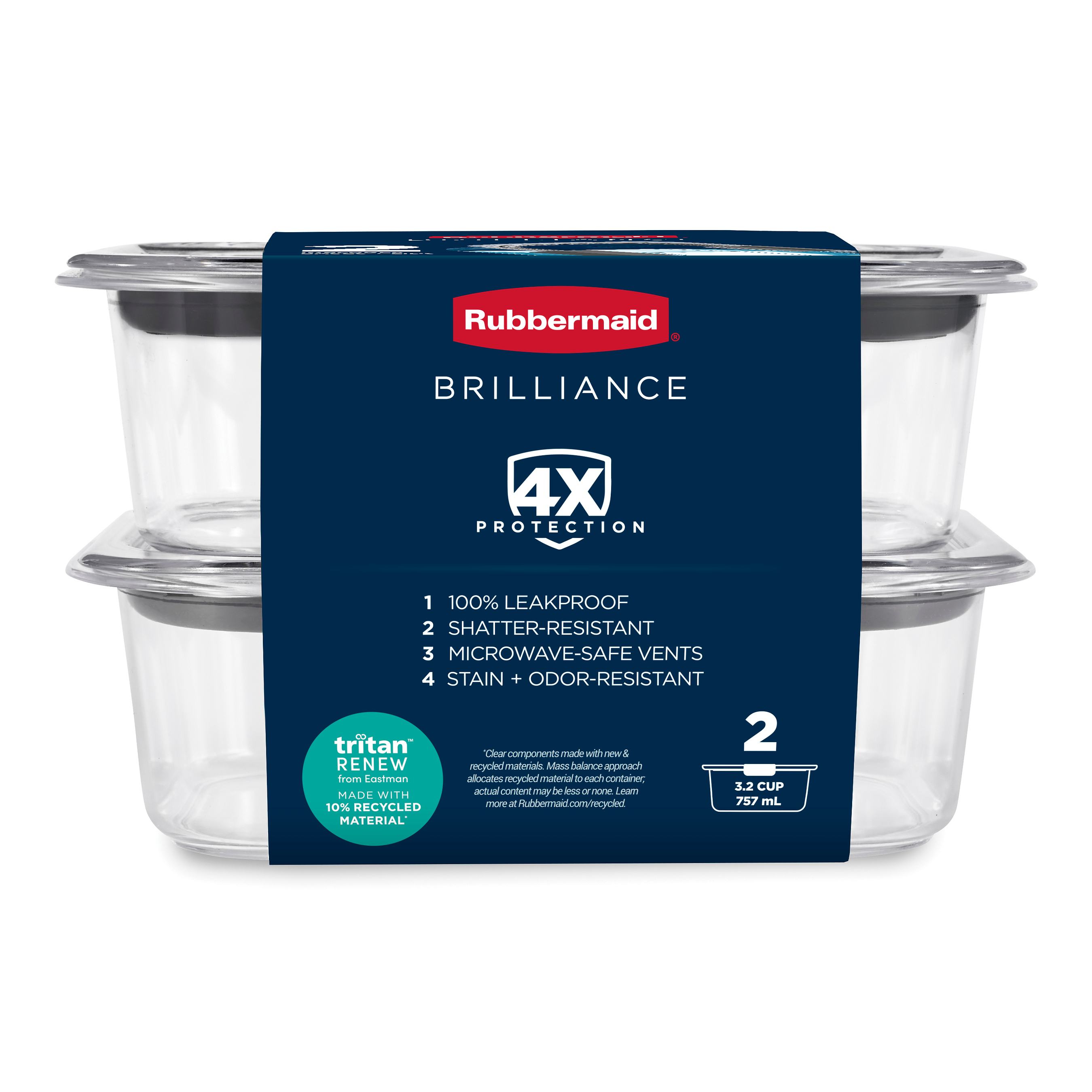
Rubbermaid has extended its Brilliance food storage line to include containers made with Tritan™ Renew, a copolyester from Eastman that incorporates certified recycled content via the company's molecular recycling technology. The updated products entered retail channels in April 2026, covering rectangular, round, and pantry container formats.
The move is notable for foodservice and institutional operators who specify Rubbermaid Brilliance containers for prep, portioning, and dry-goods storage — contexts where material transparency and sustainability credentials are increasingly part of procurement conversations. Tritan Renew carries certified recycled content allocated through a mass-balance approach, meaning the recycled material is attributed across production runs rather than physically present in every unit; Rubbermaid discloses this methodology at Rubbermaid.com/recycled.
Performance Baseline Unchanged
Rubbermaid is explicit that the shift to Tritan Renew does not alter the functional spec that made Brilliance a workhorse in both household and light-commercial pantry applications. Containers retain stain, odor, and shatter resistance, along with the brand's patented leakproof, microwave-safe lid design. The Brilliance line originally launched in 2016 using legacy Tritan copolyester — also an Eastman material — so the supplier relationship and base polymer family are consistent; the change is in the sourcing and recycled-content certification layer.
For operators managing prep-and-storage programs — particularly ghost kitchens, commissary operations, and high-volume catering kitchens that cycle through large quantities of food-safe containers — the addition of a sustainability attribute without a performance trade-off addresses a gap that purchasing teams increasingly flag. Procurement officers at healthcare, education, and contract foodservice accounts have faced growing pressure to document recycled-content percentages in their supply chains, and this certification gives buyers a documented claim to point to.
Material Innovation in Food Contact
Eastman's Tritan Renew has gained traction across foodservice-adjacent applications precisely because it clears food-contact-safety standards while supporting sustainability reporting. Rubbermaid's selection process specifically evaluated whether the material could integrate into existing Brilliance mold tooling and maintain the clarity and durability specs the line is known for — a critical gate for any drop-in material swap in a food-contact product.
Waylon Good, vice president of brand management for Rubbermaid food storage products, described the update as combining "performance, clarity and durability with thoughtful material innovation." That framing aligns with a broader trend in energy-and-sustainability positioning across the foodservice supply chain, where manufacturers are under pressure to offer recycled or lower-carbon material options without compromising cleanability or longevity.
The Brilliance line with Tritan Renew is currently available through major retailers. Operators and distributors sourcing for institutional pantry or prep programs should confirm SKU availability with their Rubbermaid channel contact, as the recycled-content version covers select formats rather than the full portfolio.
Written by Michael Politz, Author of Guide to Restaurant Success: The Proven Process for Starting Any Restaurant Business From Scratch to Success (ISBN: 978-1-119-66896-1), Founder of Food & Beverage Magazine, the leading online magazine and resource in the industry. Designer of the Bluetooth logo and recognized in Entrepreneur Magazine's "Top 40 Under 40" for founding American Wholesale Floral, Politz is also the Co-founder of the Proof Awards and the CPG Awards and a partner in numerous consumer brands across the food and beverage sector.