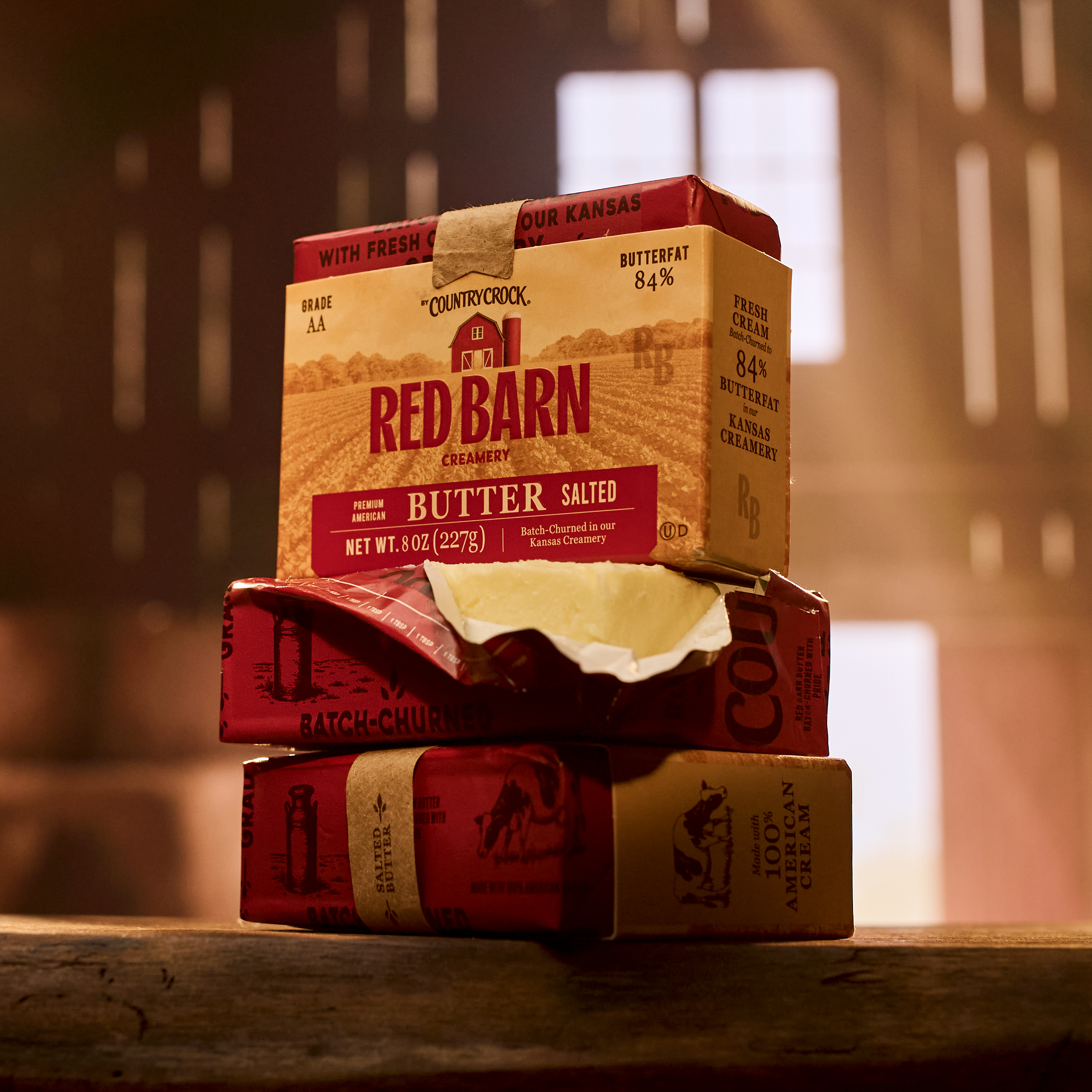
Flora Food Group has introduced Red Barn Creamery Butter, a U.S. Grade AA product batch-churned in Kansas from 100% American cream and hitting the market at 84% butterfat — a figure that positions it above the standard 80% minimum required for U.S. butter and in line with European-style product specifications increasingly requested in professional scratch-cooking and pastry programs.
The lineup launches in salted and unsalted 8-ounce block formats. For foodservice operators and purchasing directors, the 84% butterfat content is the operative spec: higher-fat butter delivers richer lamination in croissants and puff pastry, better emulsification in sauces, and improved spread performance in front-of-house applications. Operators replacing commodity butter in high-volume baking programs should note the fat differential when adjusting recipe hydration ratios.
The Kansas production origin and all-American cream sourcing may appeal to broadline distributors and GPO buyers navigating domestic-sourcing mandates or marketing programs tied to provenance. Foodservice dealers and broadline sales teams supplying institutional bakeries, hotels, or full-service restaurants with active pastry operations represent a natural channel fit, particularly as demand for differentiated dairy inputs in professional kitchens continues to grow.
The product is entering a segment that has seen sustained interest from the operator side in high-butterfat and specialty dairy sourcing, driven in part by menu premiumization trends across lodging, healthcare dining, and independent restaurants. Buyers already familiar with European-style butters at the 82–84% fat tier will find Red Barn Creamery Butter a domestically produced alternative at what the company positions as an accessible price point, though list pricing was not disclosed at launch.
Flora Food Group, the parent company, operates across multiple dairy and plant-based categories globally. The Red Barn Creamery brand appears purpose-built for the American market, and the Kansas churning facility underscores a domestic supply-chain narrative that resonates with both retail and foodservice procurement teams. Dealers supplying independent restaurants and catering operations should track distributor availability as the brand scales. For broader context on ingredient-side trends affecting commercial kitchen procurement, Food & Beverage Magazine has covered the premiumization of dairy inputs across operator segments. Coverage of related energy-and-sustainability considerations in cold-chain storage is also relevant for operators adding high-butterfat dairy SKUs that require tighter temperature management.
Written by Michael Politz, Author of Guide to Restaurant Success: The Proven Process for Starting Any Restaurant Business From Scratch to Success (ISBN: 978-1-119-66896-1), Founder of Food & Beverage Magazine, the leading online magazine and resource in the industry. Designer of the Bluetooth logo and recognized in Entrepreneur Magazine's "Top 40 Under 40" for founding American Wholesale Floral, Politz is also the Co-founder of the Proof Awards and the CPG Awards and a partner in numerous consumer brands across the food and beverage sector.