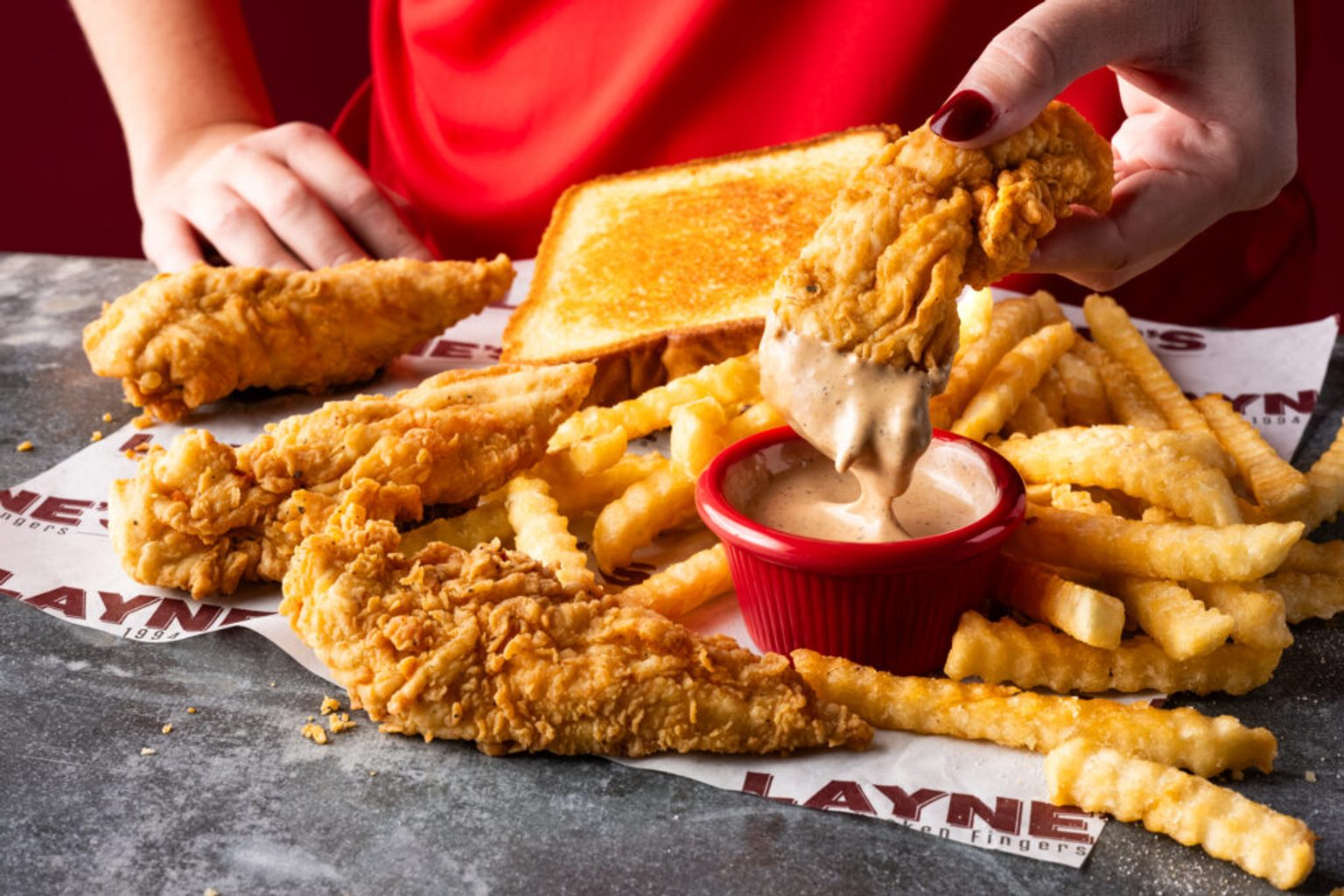
Layne's Chicken Fingers crossed the 50-unit operating threshold in the first half of 2026, signing 24 new franchise agreements that point to a significant wave of kitchen buildouts across multiple states. The Texas-born chain, founded in College Station in 1994, now has more than 51 locations open and a development pipeline that reaches into California and Oklahoma for the first time.
The growth carries direct implications for prep-and-storage and cooking-equipment specifiers: each new Layne's unit centers on a hand-breading and frying operation built around high-throughput pressure or open fryer banks, holding equipment, and sauce-dispensing stations. As the chain scales from emerging-brand status toward a larger regional footprint, the equipment fleet required to support consistent hand-breaded chicken finger production across franchisee-owned kitchens grows proportionally.
California and Oklahoma Expansion
The most consequential new deal pairs Layne's with experienced IHOP multi-unit operators for a 12-unit California debut — a state where energy-and-sustainability regulations, including Title 20 appliance standards and strict ventilation codes, often require equipment upgrades beyond what Gulf Coast markets demand. Equipment consultants specifying California kitchens for fast-casual chicken concepts will need to account for those compliance layers in hood sizing, fryer efficiency ratings, and exhaust make-up air systems.
On the Oklahoma side, multi-unit franchisee Taylor Thomas — who also operates Whataburger locations — signed a 30-unit development agreement after executing three restaurant openings within a 60-day window and breaking his own opening-week sales record. That pace of buildout compresses the equipment procurement and installation timeline considerably, putting pressure on dealers and reps to maintain fryer, holding, and refrigeration inventory for rapid sequential openings.
What 50 Units Means for Spec
For franchise brands, the 50-unit inflection point typically marks the moment when corporate engineering teams formalize equipment standards, negotiate national purchasing agreements, and tighten approved-vendor lists. CEO Garrett Reed acknowledged the milestone represents a structural shift: "For many brands, the 50-unit mark is where you turn from an emerging or startup brand to a 'real company,'" he said, noting that Layne's has focused on operational scaffolding since its founding.
That maturation tends to benefit dealers and manufacturer reps who have established relationships early in a chain's growth curve. As Layne's moves into markets with stricter code environments — California being the clearest example — the approved-equipment conversation will likely include ENERGY STAR-rated fryers, demand-controlled kitchen ventilation, and refrigeration systems that meet California's Title 20 efficiency thresholds. Consultants specifying new Layne's prototypes in those markets should expect those requirements to shape the equipment schedule from the ground up.
With internal franchisees deepening their territory commitments alongside new operators entering the system, Layne's is building the kind of development velocity that sustains multi-year equipment purchasing relationships. The brand's Entrepreneur Franchise 500 placement for 2026 adds a recruiting tailwind that could accelerate deal signings — and kitchen builds — through the back half of the year.
Written by Michael Politz, Author of Guide to Restaurant Success: The Proven Process for Starting Any Restaurant Business From Scratch to Success (ISBN: 978-1-119-66896-1), Founder of Food & Beverage Magazine, the leading online magazine and resource in the industry. Designer of the Bluetooth logo and recognized in Entrepreneur Magazine's "Top 40 Under 40" for founding American Wholesale Floral, Politz is also the Co-founder of the Proof Awards and the CPG Awards and a partner in numerous consumer brands across the food and beverage sector.