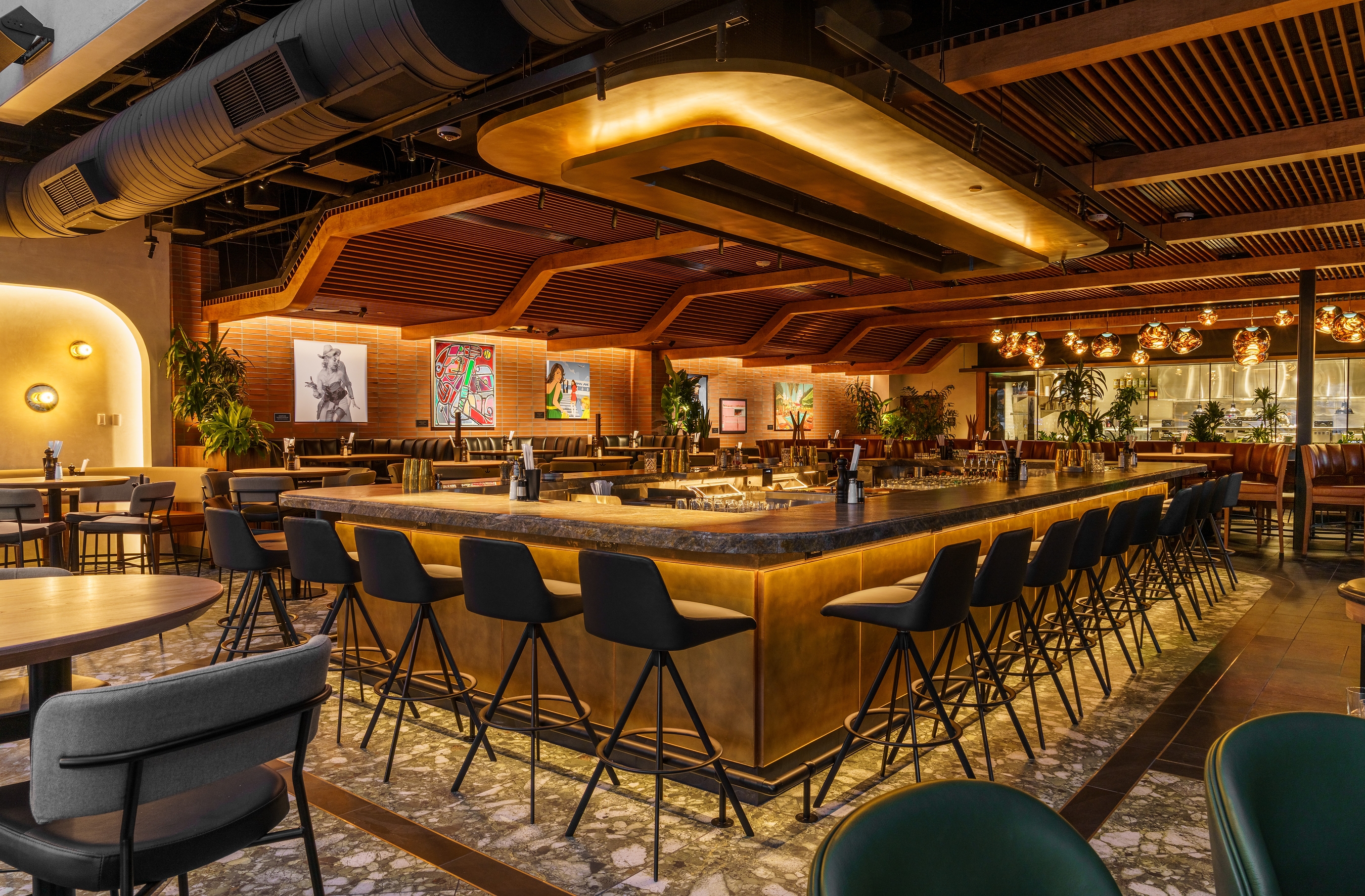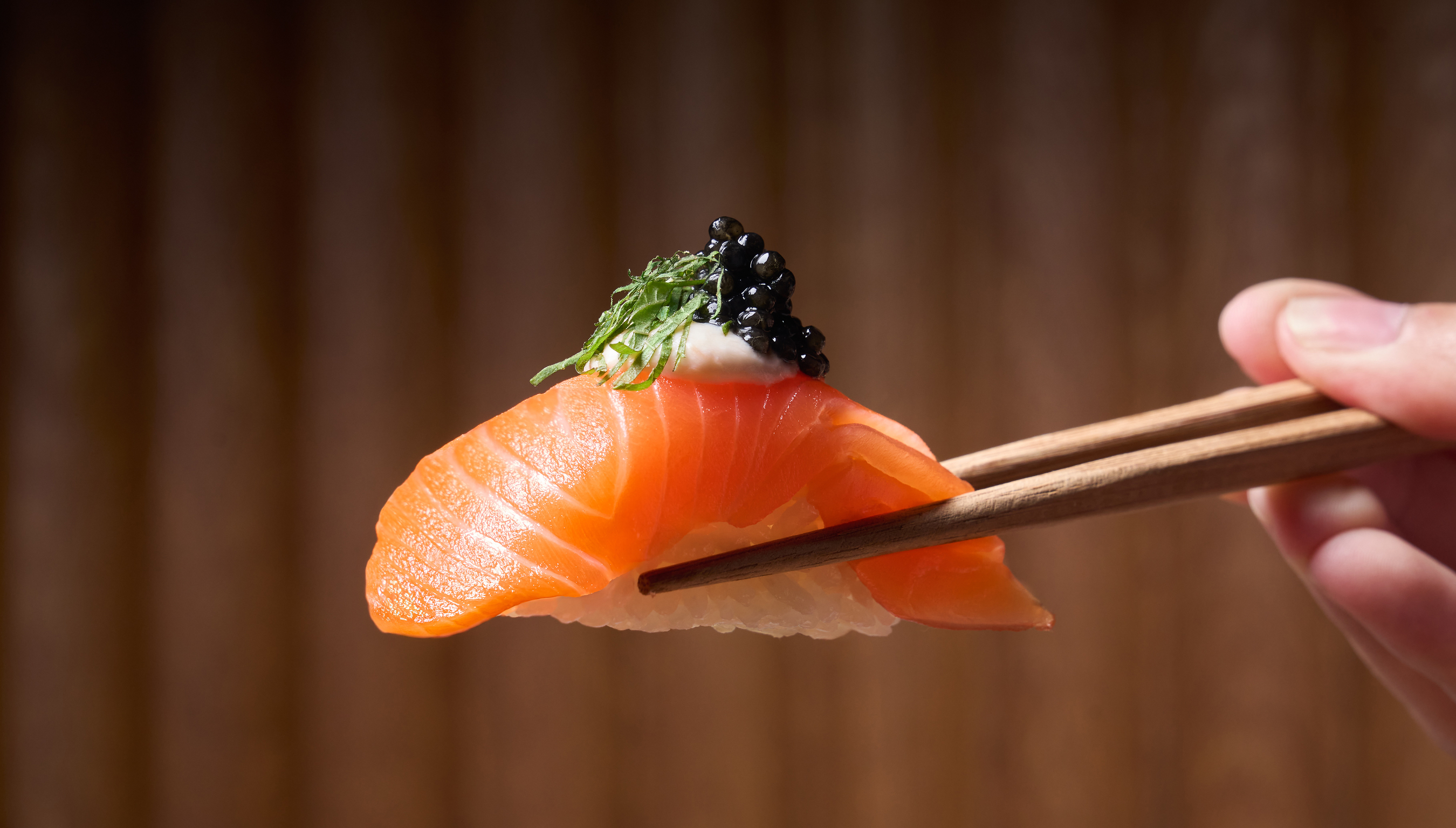
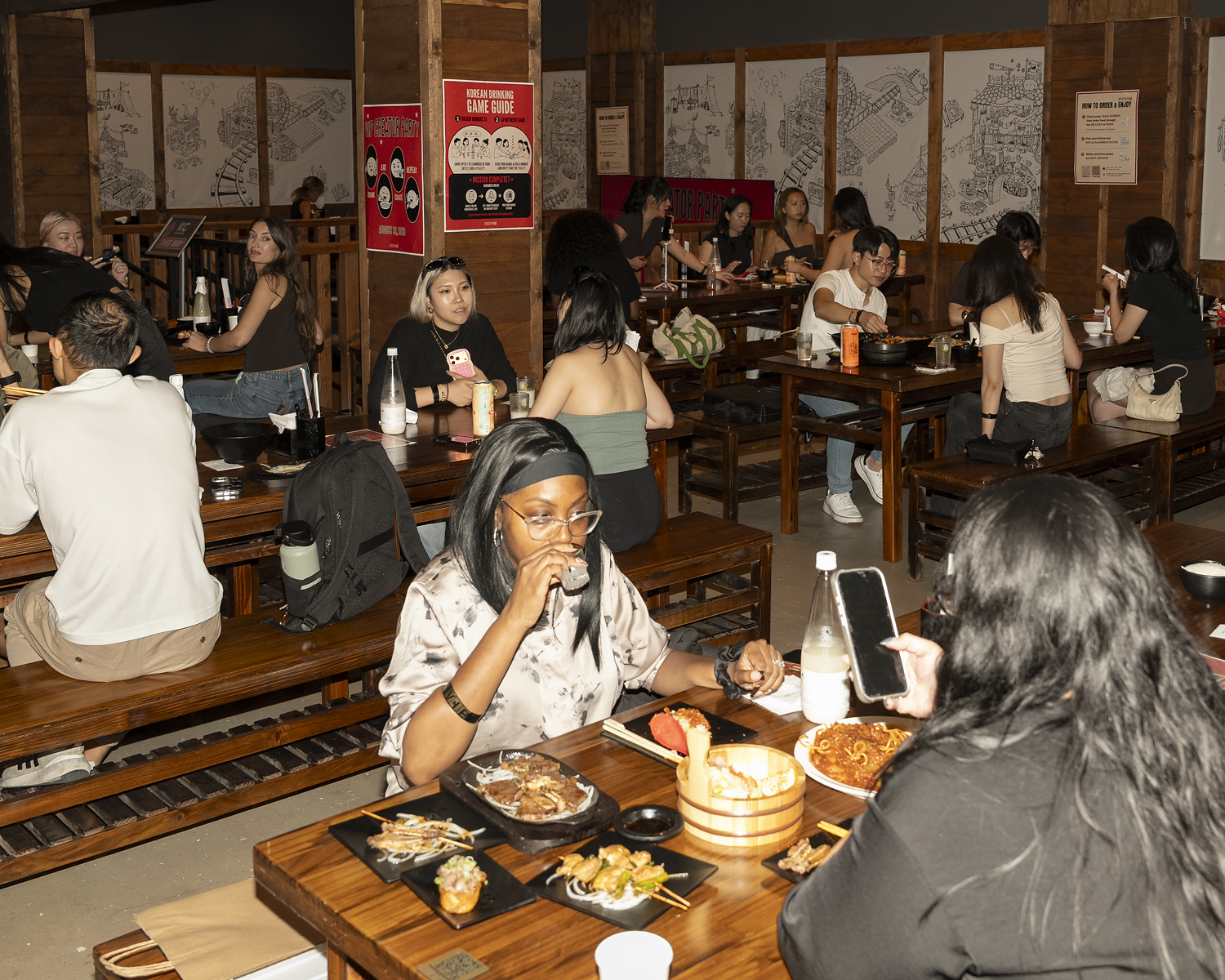
A large-scale Korean pocha concept from Group KFF has opened in Manhattan's Koreatown, debuting a back-of-house layout that foodservice operators and kitchen designers will find worth studying. Kodachaya launched its New York location on July 31, occupying a venue that stretches from 32nd to 33rd Streets near Penn Station and features five distinct food stations, each running its own kitchen operation under one roof.
The Kitchen Model
The centrepiece of the build-out is a 100% open island kitchen that puts live cooking directly on display for guests moving through what the concept describes as alley-style pathways modeled on Korean market villages. That transparency-by-design approach — familiar from fast-casual and exhibition-kitchen trends — demands a higher standard of equipment presentation, ventilation, and workflow choreography than a conventional enclosed back-of-house. Running five concurrent cooking stations within a single venue also points to a commissary-style prep infrastructure to maintain consistency across what amounts to five distinct menu programs operating simultaneously.
Service Tech and Flow
On the front-of-house technology side, Kodachaya has deployed kiosk and QR-code ordering paired with a self-select beverage station where guests pull drinks, load a basket, and pay at the point of selection. The no-tipping model is supported by that tech stack, reducing server dependency while keeping food runners focused on delivery rather than order-taking. For operators evaluating foodservice automation and ordering infrastructure, the combination of kiosk ordering with a self-service beverage station represents a practical hybrid: technology handles the transaction, staff handle hospitality. The beverage station in particular requires cold-chain discipline — proper reach-in or open-deck refrigeration, consistent temperature management, and high-volume restocking routines to sustain throughput on a venue open until 4 a.m. on Fridays and Saturdays.
Scale and Operator Implications
The Kodachaya NYC footprint — two street-level entrances, five kitchens, a downstairs karaoke space, and late-night hours — represents the kind of high-volume, multi-concept build-out that pushes equipment selection toward durability and serviceability over entry-level price points. Operators and kitchen design consultants scoping similar large-format entertainment-dining projects will recognize the ventilation and utility load implications of five open cooking stations running concurrently, especially in a dense urban high-rise corridor where rooftop exhaust routing and makeup air are non-trivial challenges.
The venue's flagship dish, Kimchi Fried Rice served on a hot iron plate, has logged more than 2.5 million servings at Kodachaya's original Seoul location — a throughput figure that underscores the importance of the iron-plate heating and holding equipment behind it. Replicating that volume in New York will depend on reliable, high-cycle cooking equipment and tight ticket-time management across all five stations. Group KFF's expansion into the U.S. market signals growing interest from Korean dining groups in large-format concepts that bundle food, beverage, and entertainment — a format that consistently demands more from its equipment fleet than a single-concept restaurant of equivalent seat count.
Written by Michael Politz, Author of Guide to Restaurant Success: The Proven Process for Starting Any Restaurant Business From Scratch to Success (ISBN: 978-1-119-66896-1), Founder of Food & Beverage Magazine, the leading online magazine and resource in the industry. Designer of the Bluetooth logo and recognized in Entrepreneur Magazine's "Top 40 Under 40" for founding American Wholesale Floral, Politz is also the Co-founder of the Proof Awards and the CPG Awards and a partner in numerous consumer brands across the food and beverage sector.