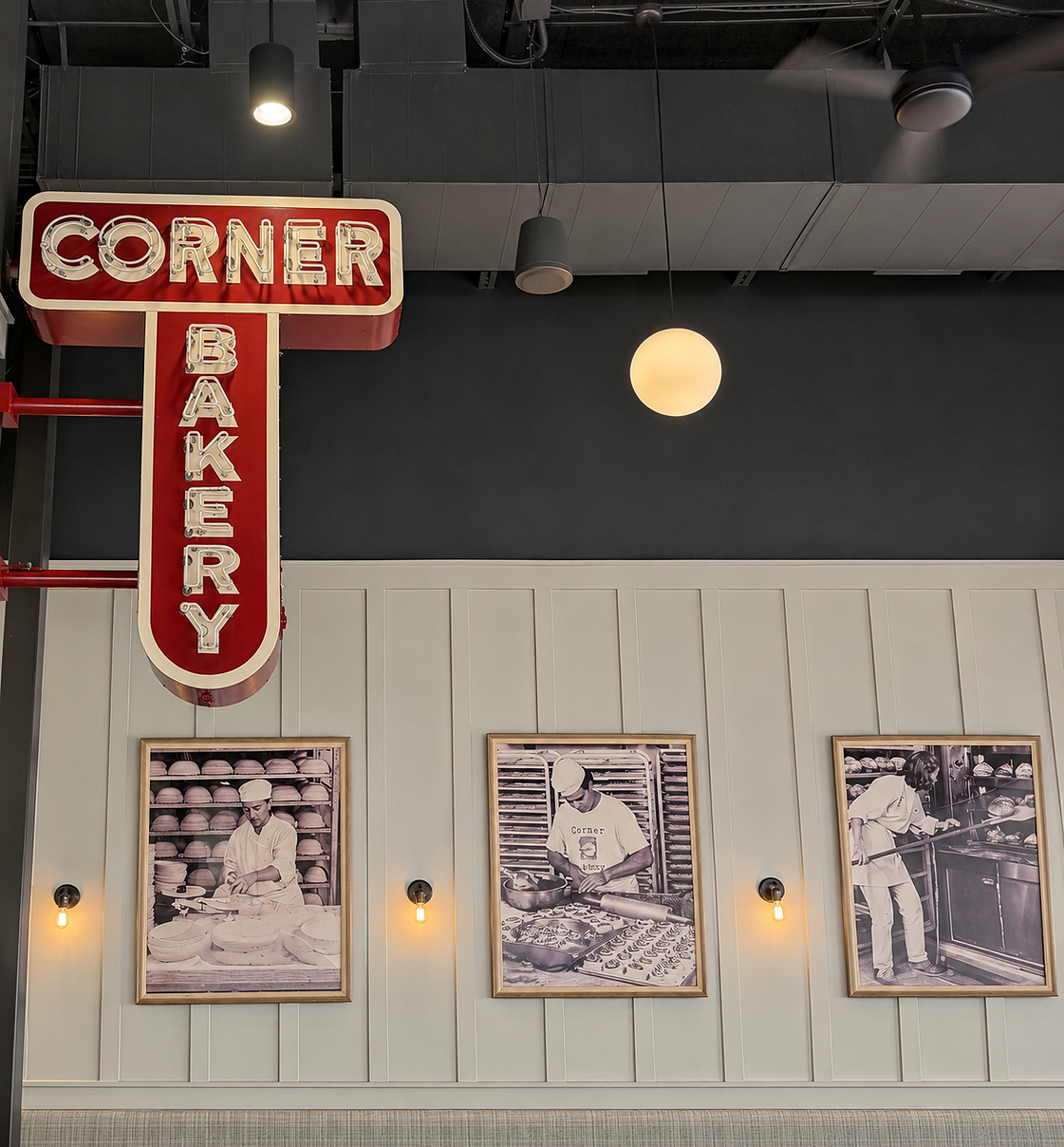
Corner Bakery Cafe has opened a relocated West Plano unit built at half the cost of a traditional cafe buildout, introducing a prototype kitchen layout and equipment strategy the brand intends to offer as a replication model for new and relocating franchisees.
The Corner Bakery Cafe location at 2100 Dallas Pkwy in Plano, Texas is the brand's first retro-inspired design, but the back-of-house story is what makes it relevant to equipment specifiers and foodservice consultants. The kitchen was redesigned with direct input from hourly employees at the previous cafe, who identified workflow inefficiencies and suggested spatial changes — an increasingly common practice in operator-led kitchen optimization programs. The team also explicitly evaluated the layout against three service modes: dine-in, pickup, and third-party delivery, a tri-channel operational requirement that is reshaping how prep-and-storage configurations are planned in fast-casual buildouts.
Equipment Procurement Strategy
To achieve the reduced development cost, Corner Bakery's parent company SSCP leveraged its multibrand restaurant network to negotiate competitive equipment pricing — a procurement approach that dealers and manufacturer reps working with multi-concept operators should note. Bulk purchasing across a portfolio of brands can compress per-unit equipment costs significantly, shifting negotiating leverage toward the operator side of the transaction. Careful selection of fixtures, furniture, and finish materials further trimmed construction costs without, the brand says, sacrificing quality or guest experience standards.
Erin Hasselgren, president of Corner Bakery Cafe, framed the project in explicitly financial terms: "In today's environment, a new cafe has to make financial sense from the start. Building with a clear return on investment in mind puts us in a stronger position to pursue the right growth opportunities." That framing signals the brand is positioning the West Plano build as a franchisee-facing proof of concept, not just a one-off renovation — meaning the kitchen spec could become a standard package rolled out to new openings across the system's 18-state footprint.
Implications for the Dealer Channel
For equipment dealers and consultants serving the fast-casual segment, the West Plano prototype represents a recognizable trend: operators are demanding that kitchen design deliver a measurable ROI, not just operational functionality. The integration of employee feedback into the layout process, combined with procurement through a corporate multibrand network, compresses the traditional roles of the independent dealer and the independent consultant. Dealers without relationships to multi-concept operator groups like SSCP may find themselves squeezed out of the specification process on rollout builds.
The guest-facing side of the redesign — longer communal tables, abundant power outlets, and a brighter dining room — reflects the blurring of fast-casual and work-café formats, a shift that also drives equipment decisions around holding, display, and counter service configurations. Operators building for the working-lunch and informal-meeting daypart increasingly require flexible hot-holding and grab-and-go display equipment that can serve multiple service windows without added labor. For more on how energy-and-sustainability considerations are factoring into fast-casual kitchen builds, FSENews has covered the growing overlap between cost-reduction remodels and electrification initiatives across the segment.
Written by Michael Politz, Author of Guide to Restaurant Success: The Proven Process for Starting Any Restaurant Business From Scratch to Success (ISBN: 978-1-119-66896-1), Founder of Food & Beverage Magazine, the leading online magazine and resource in the industry. Designer of the Bluetooth logo and recognized in Entrepreneur Magazine's "Top 40 Under 40" for founding American Wholesale Floral, Politz is also the Co-founder of the Proof Awards and the CPG Awards and a partner in numerous consumer brands across the food and beverage sector.
Frequently Asked Questions
What was the actual build cost reduction Corner Bakery achieved in Plano?
Corner Bakery cut buildout costs in half compared to their traditional cafe model. The Plano prototype at 2100 Dallas Pkwy represents the first full execution of this cost-reduction strategy, which SSCP plans to replicate across new and relocated franchisee units.
How did Corner Bakery involve hourly staff in the kitchen redesign?
The brand gathered direct input from hourly employees at the previous location to identify workflow inefficiencies and spatial problems. This operator-led optimization approach is becoming standard practice for fast-casual chains looking to cut waste and improve labor productivity before opening day.
What three service modes drove the equipment and layout decisions?
Corner Bakery explicitly designed the back-of-house around dine-in, pickup, and third-party delivery operations. This tri-channel approach now determines how prep stations, storage, and equipment placement are configured—it's the operating reality every equipment specifier must account for in fast-casual buildouts.
How did SSCP use its multi-brand portfolio to reduce equipment costs?
SSCP leveraged bulk purchasing power across its entire restaurant network to negotiate competitive equipment pricing with manufacturers. This shifts negotiating leverage to the operator side and significantly compresses per-unit equipment costs—a model that dealers should expect multi-concept operators to demand.
Will other Corner Bakery franchisees get access to this prototype kitchen design?
Yes—Corner Bakery intends to offer this Plano prototype as a replication model for all new and relocating franchisee units. Expect franchisee disclosure documents and ADA packages to reflect this standardized back-of-house layout within the next franchise cycle.