The Asia Debut
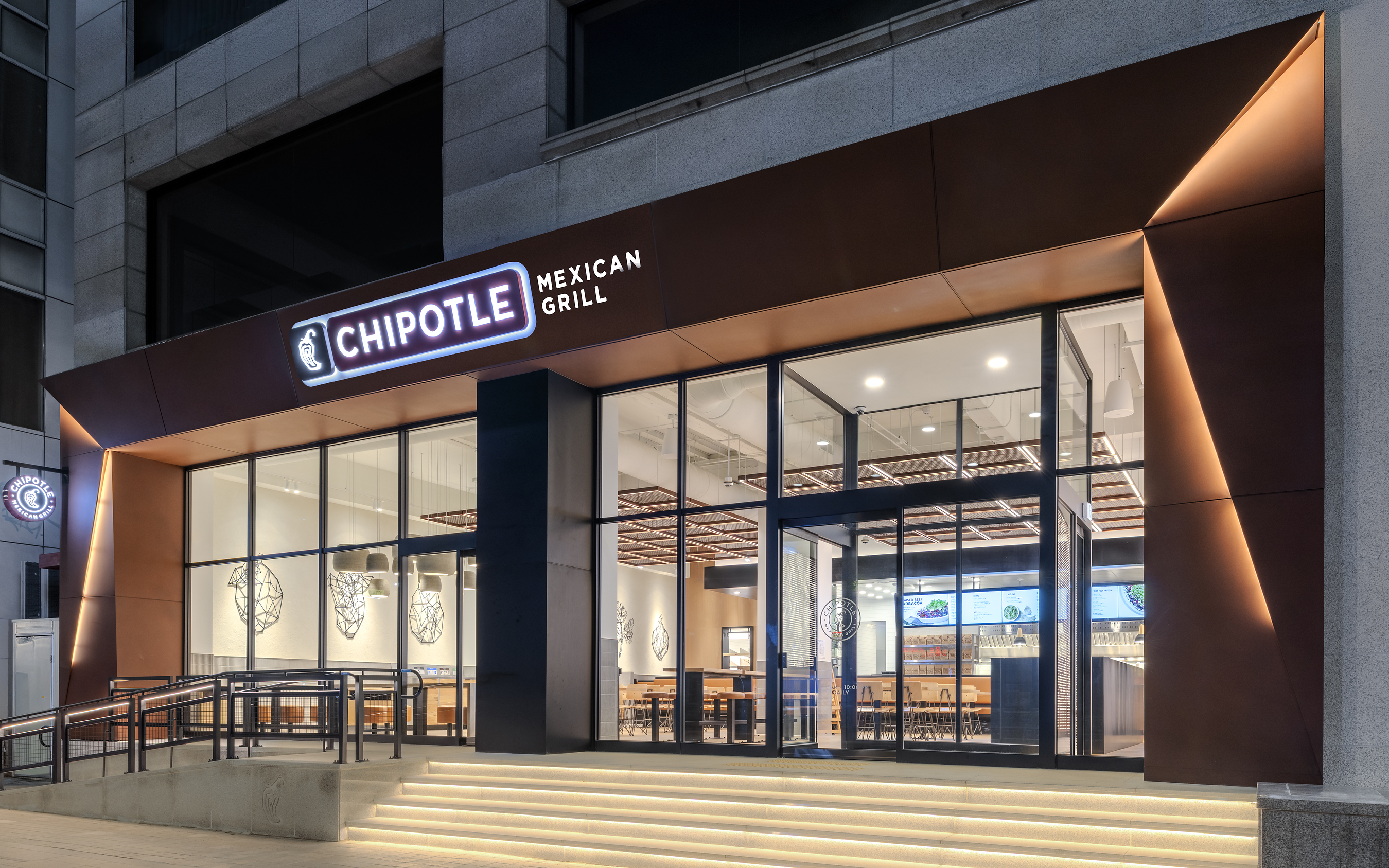
Chipotle Mexican Grill has opened its first restaurant in Asia at 423 Gangnam-daero, Seocho-gu, Seoul, South Korea, operating through S&C Restaurants Holdings, a joint venture formed with Sangmidang Holdings (formerly SPC Group). The Gangnam location marks a significant back-of-house buildout challenge: replicating Chipotle's signature fresh-prep model—knife work, open-flame grilling, and daylong ingredient cycling—in a new regulatory and supply-chain environment far removed from the chain's 4,200-plus North American and European units.
For foodservice equipment specifiers and kitchen designers, the Seoul opening signals the construction of an entirely new regional commissary and restaurant equipment infrastructure. Chipotle's culinary model demands a specific kit list: high-output double-sided grills for proteins, large-volume rice cookers running on continuous cycles, refrigerated make-lines holding ingredients at precise temperatures, and the open-format serving counter that defines the brand's guest-facing flow. Replicating that across a new continent—where voltage standards, gas supply, and local NSF-equivalent certifications differ—requires careful equipment selection and sourcing from the outset.
Operator and Kitchen Implications
Sangmidang Holdings brings deep local foodservice infrastructure to the joint venture. The South Korean operator runs approximately 7,000 locations worldwide under 30 brands including Shake Shack and Dunkin', meaning its procurement and facilities teams are already versed in multi-brand kitchen buildouts and equipment fleet management. That operational depth matters for Chipotle, which maintains consistent interior layouts and equipment specifications globally—consultants and dealer reps working on international franchise rollouts will recognize the challenge of sourcing equivalent-spec refrigerated make-lines, ventilation systems, and prep tables that meet both Chipotle's internal standards and local codes.
The fresh-prep emphasis is non-negotiable for the brand. Ingredients are chopped, seasoned, grilled, and staged throughout each service period, placing real demands on cold-chain and prep-storage equipment at both the commissary and restaurant level. Operators expanding into Asia-Pacific markets face analogous sourcing and cold-chain considerations—particularly around maintaining consistent hold temperatures across a distribution network that may lack the density of a mature North American supply chain.
Rollout Timeline
Chipotle and Sangmidang Holdings plan two additional South Korea openings before the end of 2026, followed by the brand's first Singapore restaurant in 2027. Singapore's hawker-culture market and high real-estate costs will present a different footprint challenge than the Gangnam flagship, likely requiring kitchen designers and cooking-equipment specifiers to adapt the standard Chipotle floor plan to smaller available square footage while preserving throughput capacity.
Chipotle CEO Scott Boatwright framed the expansion around demand for "variety, convenience and real food prepared fresh and served fast"—language that underscores the brand's reliance on a fast-casual back-of-house model built around speed and volume rather than à la carte cooking. As the chain's business development group, led by Chief Business Development Officer Nate Lawton, continues to evaluate additional partnership markets, the Seoul buildout will serve as the proof-of-concept for how Chipotle's equipment and operations playbook translates to Asia.
Written by Michael Politz, Author of Guide to Restaurant Success: The Proven Process for Starting Any Restaurant Business From Scratch to Success (ISBN: 978-1-119-66896-1), Founder of Food & Beverage Magazine, the leading online magazine and resource in the industry. Designer of the Bluetooth logo and recognized in Entrepreneur Magazine's "Top 40 Under 40" for founding American Wholesale Floral, Politz is also the Co-founder of the Proof Awards and the CPG Awards and a partner in numerous consumer brands across the food and beverage sector.