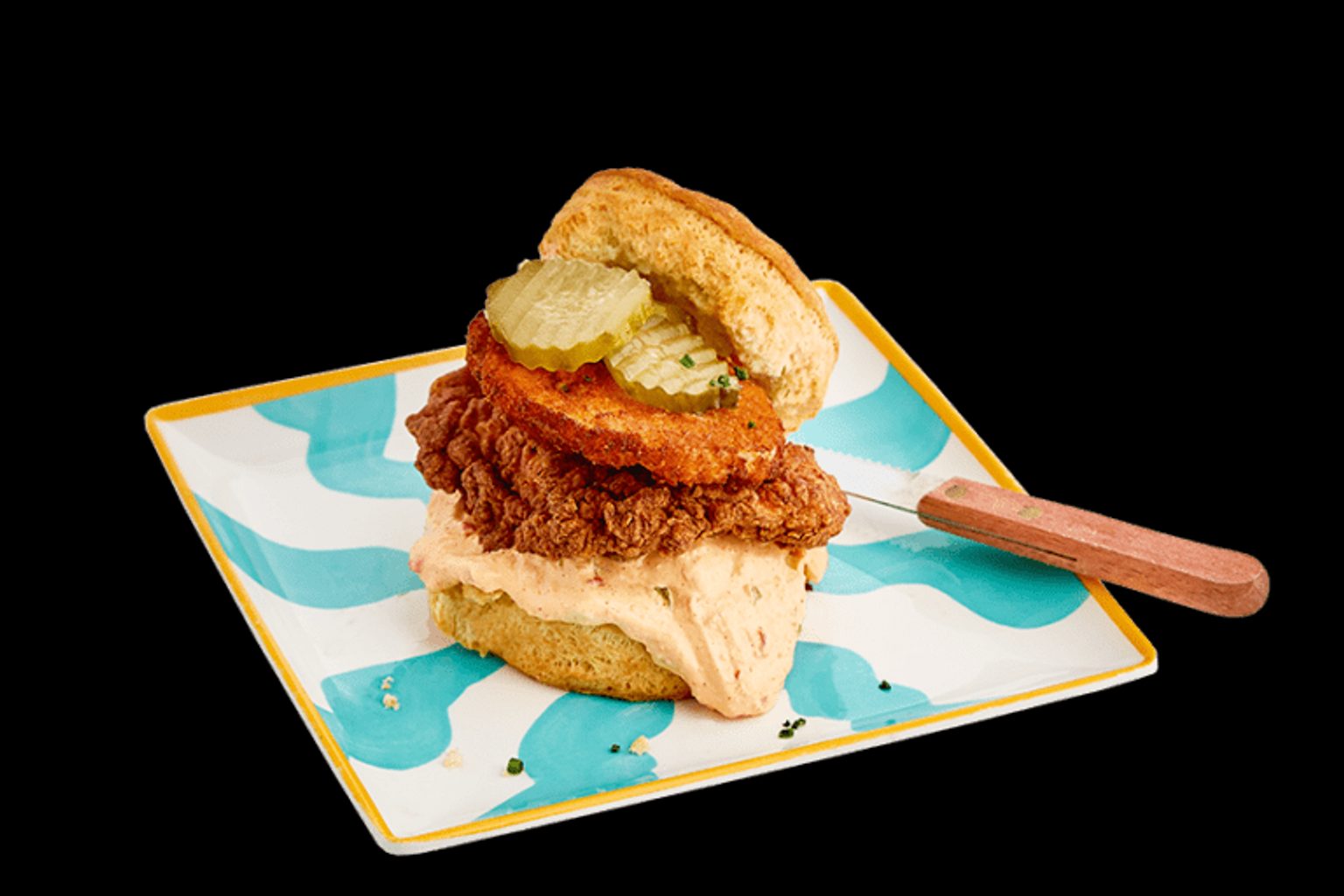
Biscuit Belly, the Louisville-based gourmet biscuit sandwich chain, is acquiring 34 Maple Street Biscuit Company locations from Cracker Barrel, a move that will more than triple its footprint and trigger one of the more ambitious multi-unit kitchen conversion programs in the fast-casual breakfast segment in recent years. The deal pushes Biscuit Belly past 60 total units on a trajectory to become the largest gourmet biscuit brand in the U.S. by the co-founders' own stated 10-year target.
Conversion Timeline
The 34 Maple Street locations will be rebranded and retrofitted to the Biscuit Belly standard over the next 18 to 24 months, with conversions beginning immediately at sites in the greater Cincinnati area and Richmond, Virginia. For equipment dealers and kitchen design consultants operating in the Southeast, the phased rollout represents a concrete pipeline of remodel projects. Each conversion is expected to introduce Biscuit Belly's signature colorful, modern interior package alongside its chef-inspired menu platform — changes that typically require updates to front-of-house millwork as well as back-of-house cooking and prep equipment configurations.
Chad Coulter, co-founder and CEO of Biscuit Belly, framed the acquisition as a shortcut past two of the most capital- and time-intensive elements of restaurant growth. "When we looked at Maple Street's geography, footprints, and established teams, a light bulb went off," Coulter said. The inherited infrastructure — including existing hood systems, utility connections, and dining room shells — reduces the hard-cost and timeline burden that would accompany ground-up builds, a calculus that operators and their equipment specifiers know well when evaluating conversion versus new construction.
What It Means for Operators
Biscuit Belly's organic base stood at 15 locations since its 2019 founding, meaning the brand has operated at a scale where menu consistency and equipment standardization are already established. Scaling from 15 to 60-plus units through a conversion program, rather than a greenfield build-out, puts a premium on equipment platform uniformity — consultants specifying the conversion kitchens will need to align legacy Maple Street equipment inventories with Biscuit Belly's preferred spec. Where existing cooking suites, refrigeration, or prep lines fall outside the incoming brand's standard, swaps or additions become necessary, creating replacement opportunities for dealers supporting the rollout.
For operators watching the breakfast and brunch fast-casual segment, the deal signals continued consolidation among biscuit-centric concepts — a niche that has attracted meaningful franchise investment over the past five years. Equipment specifiers working in the segment should note that biscuit-forward menus are heavily reliant on high-volume convection and deck oven capacity, as well as robust cold-holding for house-made fillings and proteins. Operators building or converting kitchens in this category can find relevant benchmarks in our cooking-equipment spec analysis and prep-and-storage coverage.
Co-founder Lauren Coulter noted that rapid guest demand — not an original growth plan — drove the brand's acceleration. The Maple Street acquisition compresses what would have been years of site selection, permitting, and equipment procurement into a manageable conversion calendar, freeing capital for menu and hospitality investment rather than ground-up construction costs.
Written by Michael Politz, Author of Guide to Restaurant Success: The Proven Process for Starting Any Restaurant Business From Scratch to Success (ISBN: 978-1-119-66896-1), Founder of Food & Beverage Magazine, the leading online magazine and resource in the industry. Designer of the Bluetooth logo and recognized in Entrepreneur Magazine's "Top 40 Under 40" for founding American Wholesale Floral, Politz is also the Co-founder of the Proof Awards and the CPG Awards and a partner in numerous consumer brands across the food and beverage sector.