The Tech Behind the Numbers
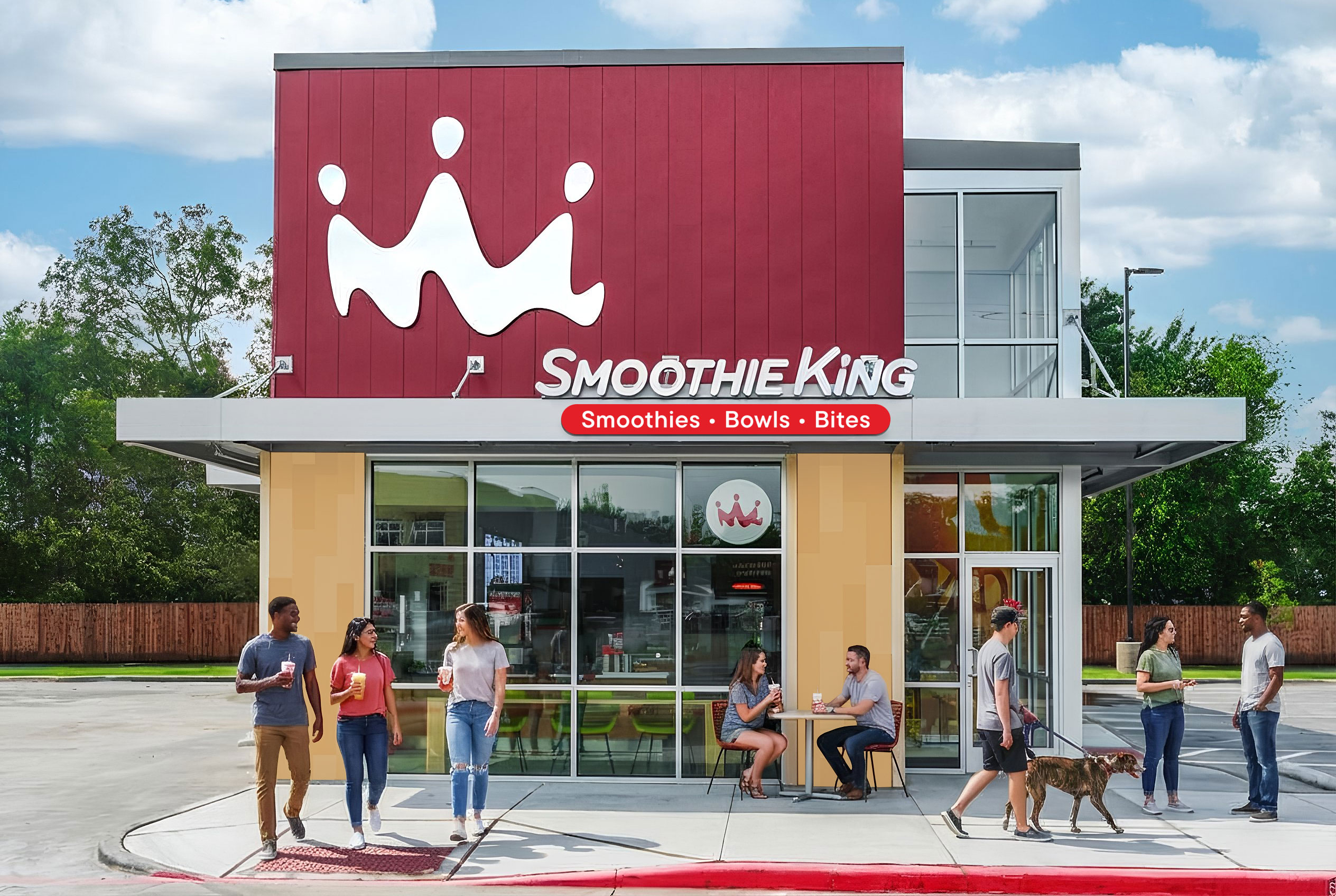
Smoothie King posted 8.7% same-store sales growth in Q3, accelerating from 5.9% in Q2, with August alone hitting 11.6% — driven in part by the July launch of protein-forward Chicken Flatbreads and a broader Power Eats food platform rollout. For equipment specifiers and foodservice operators, the more instructive story is what's running behind the counter: a proprietary AI and business intelligence stack the brand built entirely in-house to help franchisees manage increasingly complex, multi-category operations.
At the center of that investment is the Blended Intelligence Dashboard (BID), a centralized platform that consolidates sales, labor, cost of goods sold, guest feedback, and loyalty data into one morning view. Before BID, franchisees stitched together performance data from multiple disconnected systems — a common pain point in quick-service build-outs where point-of-sale, back-office, and equipment monitoring tools rarely speak the same language. The dashboard now allows operators to compare daily and year-over-year performance, drill into results by product category and sales channel, and surface trends that inform both menu decisions and staffing.
AI Forecasting and Equipment Uptime
Alongside BID, Smoothie King has deployed an AI-driven inventory and scheduling platform chainwide, using sales forecasting models to help franchisees optimize ingredient ordering and labor scheduling while reducing waste — a direct back-of-house efficiency play that mirrors the energy-and-sustainability pressures reshaping commissary and QSR kitchen design industry-wide. The brand has also increased investment in proactive equipment issue resolution and faster equipment replacement, signaling that blending and refrigeration uptime is now treated as an operational metric, not just a maintenance afterthought.
"From AI-driven forecasting that helps franchisees order and staff smarter to a dashboard that brings their business data together in one place, we're giving franchisees better tools to make informed decisions and run more efficient operations," said Jyoti Lynch, Chief Information Officer at Smoothie King.
Expansion Pipeline and Menu Build-Out
The brand opened 13 new locations in Q3 and added 39 store-opening commitments across 16 states, signing multi-unit development agreements in Chicago, Cincinnati, Cleveland, Louisville, Fort Smith, and Salt Lake City. Each new build represents a fresh prep-and-storage and refrigeration specification opportunity, as Smoothie King's expanded food platform — now encompassing smoothie bowls, protein flatbreads, and bundled meal formats — requires more food-safe prep surface, cold holding, and ingredient throughput than a smoothies-only format demands.
The menu expansion is deliberate. Following its first nationwide Power Eats food menu introduction in 2025, the chain is pushing guests toward smoothie-and-food bundle purchases, increasing average ticket and visit frequency simultaneously. For dealers and consultants specifying Smoothie King builds, that evolution in menu complexity means equipment layouts and cold-storage footprints that were sized for a beverage-focused concept may need revisiting as flatbread heating, protein ingredient storage, and expanded prep workflows become standard. With more than 1,250 units nationwide and a growing development pipeline, Smoothie King's back-of-house modernization story is one that equipment channel stakeholders will want to track closely.
Written by Michael Politz, Author of Guide to Restaurant Success: The Proven Process for Starting Any Restaurant Business From Scratch to Success (ISBN: 978-1-119-66896-1), Founder of Food & Beverage Magazine, the leading online magazine and resource in the industry. Designer of the Bluetooth logo and recognized in Entrepreneur Magazine's "Top 40 Under 40" for founding American Wholesale Floral, Politz is also the Co-founder of the Proof Awards and the CPG Awards and a partner in numerous consumer brands across the food and beverage sector.