Houston-based Shipley Donuts has signed a two-store development agreement with Docwise One LLC to open franchise locations in Port St. Lucie and Vero Beach, Florida — each built around a live production bakery that runs daily from 3 a.m.
The franchise partners, native Houstonian Andrew Podoloff and longtime Treasure Coast resident Wendy Lounds, plan to open the first shop in late 2027 and the second in 2028. Podoloff will work on-site daily, an operational model that aligns with Shipley's hands-on franchise profile.
The Bakery Kitchen Model
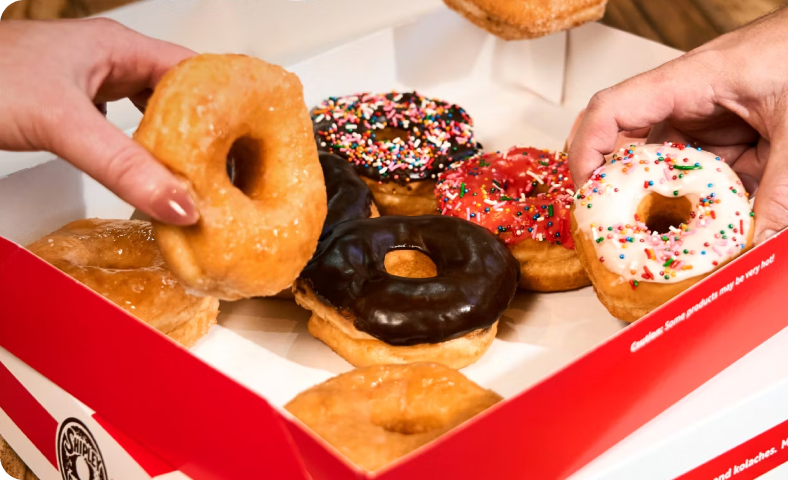
Each Shipley unit functions as a full back-of-house production facility as much as a retail storefront. Bakers clock in at 3 a.m. to execute the first scratch batch of donuts and kolaches, and the brand's Hot Glazed Guarantee requires warm glazed donuts to be served continuously until 10 a.m. That commitment demands reliable proofing, frying, and glazing equipment operating on a tightly timed cycle every single day — a spec burden that sits squarely on the equipment package selected for each buildout.
The menu scope adds further kitchen complexity: beyond the signature hexagon-cut glazed donut, each location produces savory kolaches — handmade breakfast sandwiches filled with sausage, egg, bacon, jalapeño, and cheese, baked inside fresh dough. An expanded coffee program includes drip and espresso-based drinks such as the Classic Glazed Latte with cold foam and donut crumbles, meaning the front-of-house equipment fleet extends to grinders, espresso machines, and cold-brew or cold-foam dispensing.
Florida Footprint Grows
The two Treasure Coast units will join existing Florida shops in Clearwater, Jacksonville, and Orlando, pushing the brand's presence deeper into a high-growth Sun Belt market. Shipley now counts nearly 400 locations across 13 states, and the chain is actively recruiting franchisees throughout the South, Southeast, and Midwest.
For foodservice equipment dealers and kitchen designers in the Port St. Lucie and Vero Beach areas, two greenfield donut-and-bakery buildouts arriving within roughly 12 months of each other represent a concrete near-term opportunity. Commissioning a working bakery of this type typically involves commercial deck or rack ovens, a commercial fryer battery, dough sheeting and cutting equipment, proofing cabinets, and refrigerated dough storage — all categories where local rep and dealer relationships matter at the specification stage. Operators expanding into similar scratch-bakery production formats are increasingly scrutinizing energy consumption across fryer and oven assets as utility costs rise in Florida's climate.
The expansion also reflects a broader industry trend toward ghost-kitchen-adjacent commissary thinking: even consumer-facing QSR bakery brands are designing their back-of-house as small-scale production kitchens capable of consistent, volume output on compressed overnight schedules. The 3 a.m. start time places acute demand on equipment reliability and sanitation turnaround before the morning rush.
Written by Michael Politz, Author of Guide to Restaurant Success: The Proven Process for Starting Any Restaurant Business From Scratch to Success (ISBN: 978-1-119-66896-1), Founder of Food & Beverage Magazine, the leading online magazine and resource in the industry. Designer of the Bluetooth logo and recognized in Entrepreneur Magazine's "Top 40 Under 40" for founding American Wholesale Floral, Politz is also the Co-founder of the Proof Awards and the CPG Awards and a partner in numerous consumer brands across the food and beverage sector.