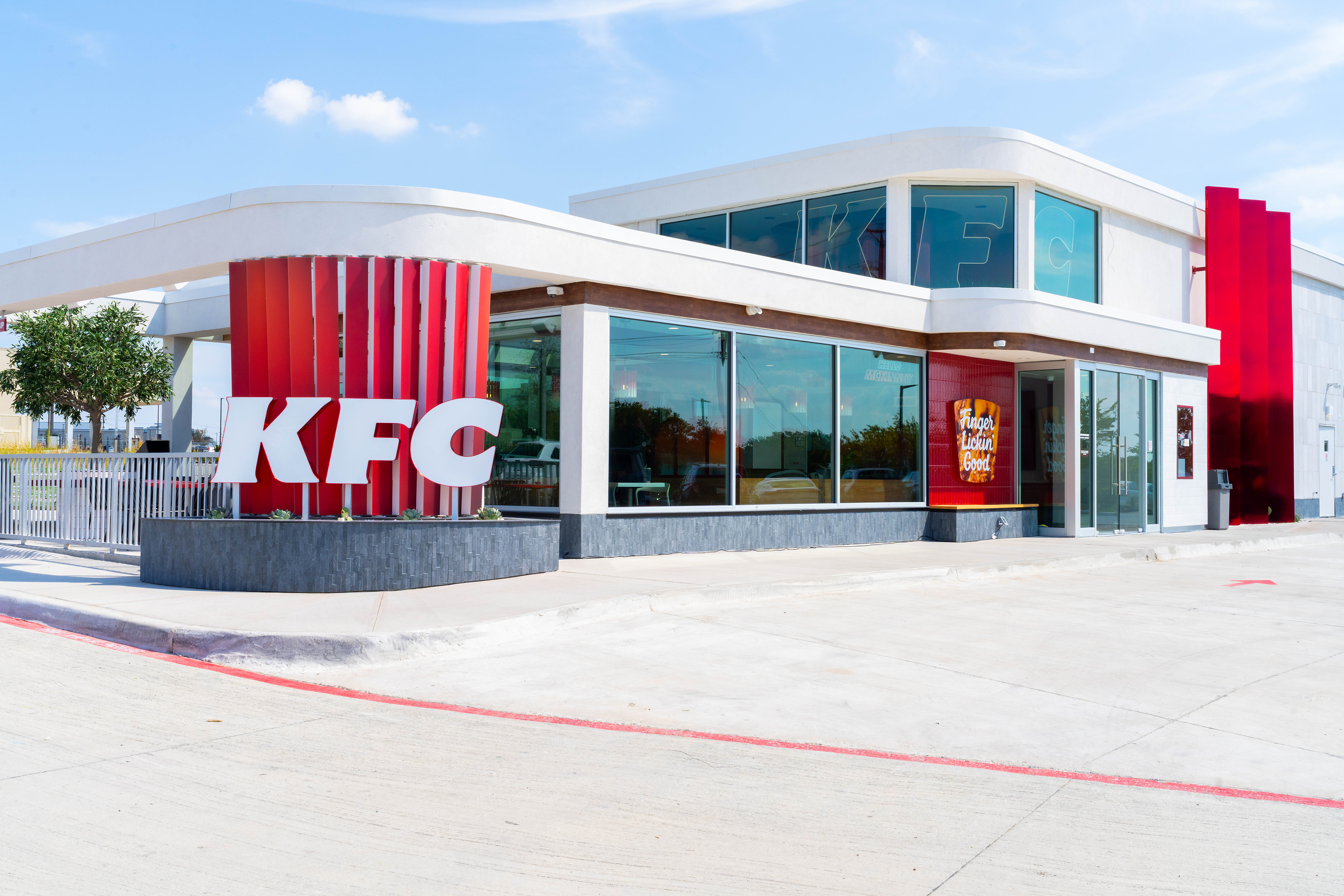
KFC's next-generation prototype, Open House, opens September 26 in McKinney, Texas, as a working laboratory for back-of-house execution and guest-flow design the chain intends to stress-test before rolling proven elements across its 3,500-plus U.S. restaurants. The 3,400-square-foot unit at 8751 El Dorado Parkway operates from 6:00 a.m. to midnight daily — an 18-hour service window that demands a kitchen configuration capable of handling breakfast, lunch, dinner, and late-night dayparts under the same roof.
The Facility Layout
From a facility and flow standpoint, Open House represents a meaningful departure from KFC's legacy footprint. The unit incorporates dual drive-thru lanes alongside a dedicated mobile-order pickup lane, a design strategy that separates conventional drive-thru traffic from digital-channel orders — a friction point operators and consultants have flagged across the QSR segment as mobile ordering volumes continue to climb. Self-order kiosks and digital menu boards handle front-of-house order capture, freeing staff for table-service duties, a hospitality model that adds labor complexity but also raises average ticket potential. Flexible indoor, outdoor, and breezeway seating accommodates 52 guests across the mid-century modern-inspired dining room, which features warm timber accents and oversized windows.
Kitchen Demand and Daypart Complexity
The expanded menu driving that 18-hour window puts real demands on the back-of-house equipment stack. Breakfast additions — including sandwiches, hash brown sticks, mini cronuts, freshly brewed coffee, and iced lattes — require holding, frying, and beverage equipment configured for a morning rush that KFC's standard U.S. kitchens have not historically needed to support. The beverage program introduces lemonades, boba refreshers, and shakes, adding dispense and blending equipment to a line already running pressure fryers for bone-in chicken and open fryers for tenders, wings, and fries. A "Drizzled" menu tier — where sauces are applied directly to finished fried product — adds a finishing station element to the service line. Operators specifying similar multi-daypart conversions should note the ventilation load implications: expanded cooking equipment categories running across an 18-hour window significantly increase makeup-air and exhaust requirements versus a standard limited-service kitchen.
KFC U.S. President Catherine Tan-Gillespie framed the McKinney unit explicitly as a systems-learning exercise. "It gives guests a reason to try us, or try us again, while giving us a real restaurant where we can learn what works for guests, our teams and the business, and scale the strongest ideas across the system," she said. That framing positions Open House less as a one-off flagship and more as a prototype kitchen whose equipment and layout decisions carry direct implications for future franchise builds and remodels across the chain.
Scale and What Comes Next
With 3,500-plus domestic locations in the system, even a partial rollout of Open House elements — the mobile pickup lane, the beverage station buildout, breakfast equipment — translates into substantial capital goods demand for dealers, distributors, and manufacturer reps serving the QSR segment. The McKinney unit's performance data will inform which components clear the bar for system-wide adoption. Equipment consultants and dealer reps tracking QSR prototype activity should watch for franchise disclosure updates and remodel specification packages that typically follow a successful prototype validation cycle of 12 to 18 months.
Written by Michael Politz, Author of Guide to Restaurant Success: The Proven Process for Starting Any Restaurant Business From Scratch to Success (ISBN: 978-1-119-66896-1), Founder of Food & Beverage Magazine, the leading online magazine and resource in the industry. Designer of the Bluetooth logo and recognized in Entrepreneur Magazine's "Top 40 Under 40" for founding American Wholesale Floral, Politz is also the Co-founder of the Proof Awards and the CPG Awards and a partner in numerous consumer brands across the food and beverage sector.