Ricoh USA, Inc. and foodservice automation firm Hyphen have formed a partnership to accelerate chain-scale deployment of robotic makeline technology across U.S. restaurants, with Ricoh providing deployment logistics, training, and ongoing service support through its RICOH Service Advantage lifecycle management program.
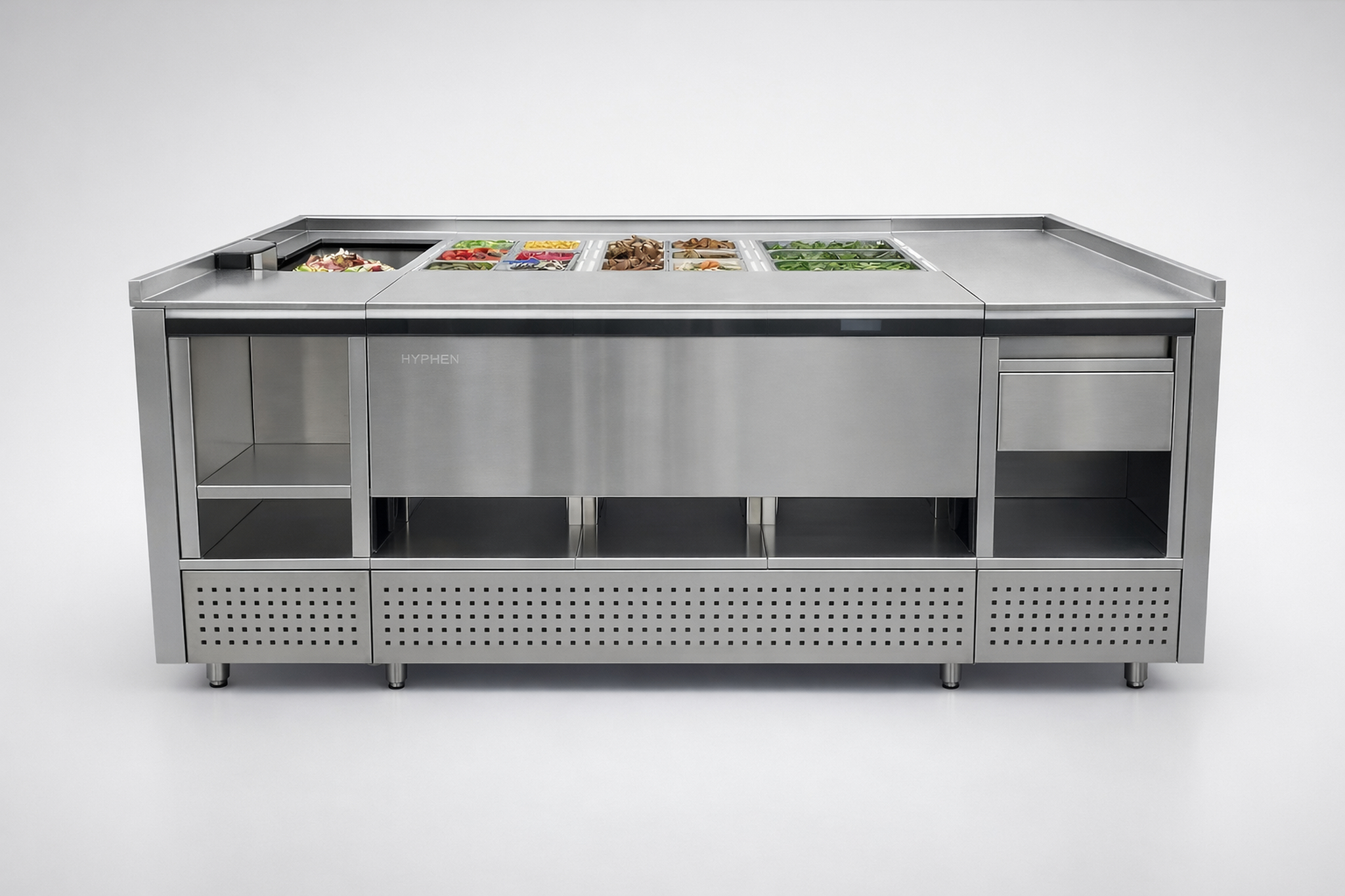
The centerpiece of the deal is Hyphen's Automated Makeline, an under-counter robotic assembly system that ingests digital drive-thru, online, and kiosk orders and automatically builds rice and salad bowls — outputting more than 200 meals per hour — while front-of-house staff continue serving in-restaurant guests from the top of the counter without interruption. The system's CulinaryOS platform allows operators to create and update recipes rapidly, fulfill multi-channel digital orders simultaneously, and reduce order defects and cross-contamination risk. Chipotle and Cava are among the backers of the technology.
The Scaling Problem
For foodservice automation technology, the gap between a proven pilot and a chainwide rollout has historically been where adoption stalls. "While we've seen tremendous interest in the potential of robotic technology to improve operations and provide a superior, more consistent customer experience, the ability to scale has hampered traction in this industry," said Shawn Lange, Senior Vice President of Go-To-Market at Hyphen. The Ricoh partnership directly targets that bottleneck by layering an established global service infrastructure — Ricoh operates in approximately 200 countries — onto Hyphen's hardware and software platform.
Steve Sanders, Vice President of Service Advantage at Ricoh North America, framed the commercial rationale plainly: restaurant operators are simultaneously chasing revenue growth through differentiated guest experience and margin recovery through cost control. The National Restaurant Association's latest industry report found that more than 90% of operators cite food, labor, insurance, and inflation-related costs as significant challenges — a pressure environment that makes a 200-meal-per-hour autonomous prep station an increasingly compelling capital investment rather than an experimental novelty.
Market and Channel Implications
The global restaurant robotics market is projected to grow from $2 billion in 2026 to $6 billion by 2033, with North America identified as the primary demand driver, according to Coherent Market Insights data cited in the release. That trajectory puts prep and back-of-house automation squarely on the capital-expenditure radar for multi-unit and fast-casual operators planning kitchen buildouts or remodels over the next several years.
For equipment consultants and specifiers, the Ricoh-Hyphen arrangement introduces a new class of vendor relationship to consider: a technology manufacturer paired with a lifecycle-management partner capable of handling installation, technician training, and break-fix support at enterprise scale. That model mirrors patterns already common in commercial warewashing and refrigeration fleet management, and its arrival in foodservice automation signals the sector's maturation. Operators evaluating under-counter robotic prep systems should now factor service-network depth — not just hardware specs — into the total-cost-of-ownership calculation.
Written by Michael Politz, Author of Guide to Restaurant Success: The Proven Process for Starting Any Restaurant Business From Scratch to Success (ISBN: 978-1-119-66896-1), Founder of Food & Beverage Magazine, the leading online magazine and resource in the industry. Designer of the Bluetooth logo and recognized in Entrepreneur Magazine's "Top 40 Under 40" for founding American Wholesale Floral, Politz is also the Co-founder of the Proof Awards and the CPG Awards and a partner in numerous consumer brands across the food and beverage sector.