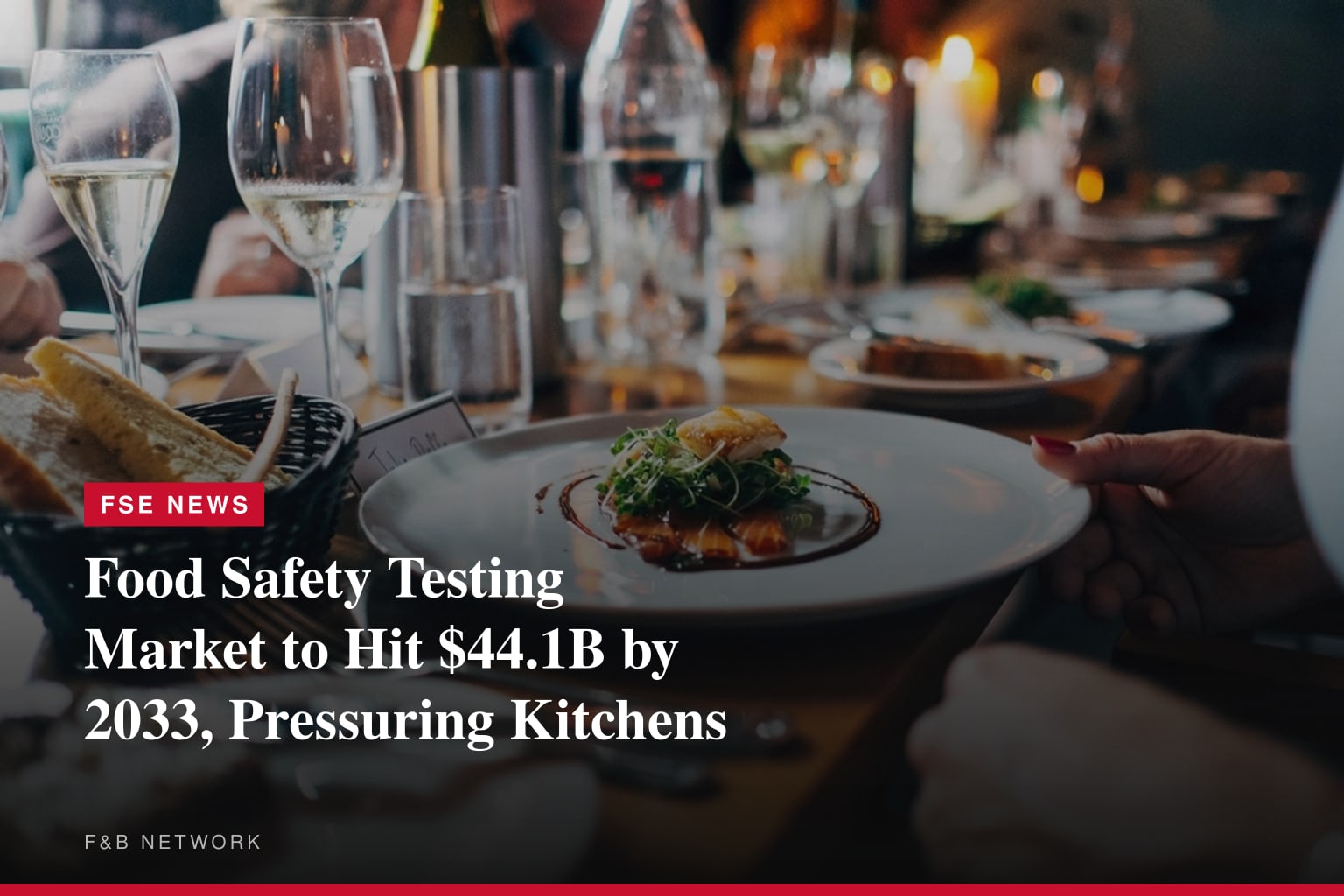
The global food safety testing market, valued at $22.5 billion in 2023, is on track to more than double to $44.1 billion by 2033, according to a new forecast from Allied Market Research. The projected 7% compound annual growth rate reflects accelerating regulatory stringency, rising incidence of food fraud across global supply chains, and rapid advances in molecular detection technologies — all of which carry downstream implications for commercial foodservice operators and the equipment ecosystems they rely on.
For equipment specifiers and consultants, the macro trend translates into a sharpening focus on kitchen environments where contamination risk intersects with capital goods decisions. Temperature control equipment — from blast chillers to walk-in refrigeration — sits at the front line of pathogen prevention, and operators facing stricter compliance audits are increasingly expected to document cold-chain integrity with precision. Consultants specifying refrigeration systems for high-volume operations should expect clients to ask harder questions about temperature logging, alarm integration, and third-party verification readiness.
The Allied Market Research report segments testing demand across pathogen detection, GMO screening, chemical and toxin analysis, heavy metals, and radioactivity — with food categories spanning meat and meat products, seafood, dairy, cereals, grains, pulses, and processed foods. PCR-based assay and immunoassay-based technologies are among the fastest-evolving testing platforms cited. For warewashing and ware-handling channel partners, this underscores the importance of validated sanitation performance data, particularly as health department inspections grow more technically sophisticated.
The food fraud dimension of the market growth is equally relevant to equipment buyers. As adulteration events continue to generate headline risk and regulatory scrutiny, operators sourcing ingredients through complex international supply chains are under pressure to implement more rigorous incoming-goods protocols — a dynamic that elevates the role of prep and storage equipment designed to support traceability workflows. Dealers positioned to offer integrated solutions that bridge equipment performance and food safety compliance documentation will find a receptive audience among chain operators and institutional buyers navigating this environment.
The broader regulatory backdrop — including ongoing FSMA enforcement in the U.S. and evolving international equivalents — ensures this market trajectory is structural rather than cyclical. Equipment manufacturers that embed data connectivity, temperature verification, and sanitation validation into their product roadmaps are aligning with a compliance-driven purchasing environment that shows no sign of easing through the forecast period ending in 2033.
Written by Michael Politz, Author of Guide to Restaurant Success: The Proven Process for Starting Any Restaurant Business From Scratch to Success (ISBN: 978-1-119-66896-1), Founder of Food & Beverage Magazine, the leading online magazine and resource in the industry. Designer of the Bluetooth logo and recognized in Entrepreneur Magazine's "Top 40 Under 40" for founding American Wholesale Floral, Politz is also the Co-founder of the Proof Awards and the CPG Awards and a partner in numerous consumer brands across the food and beverage sector.