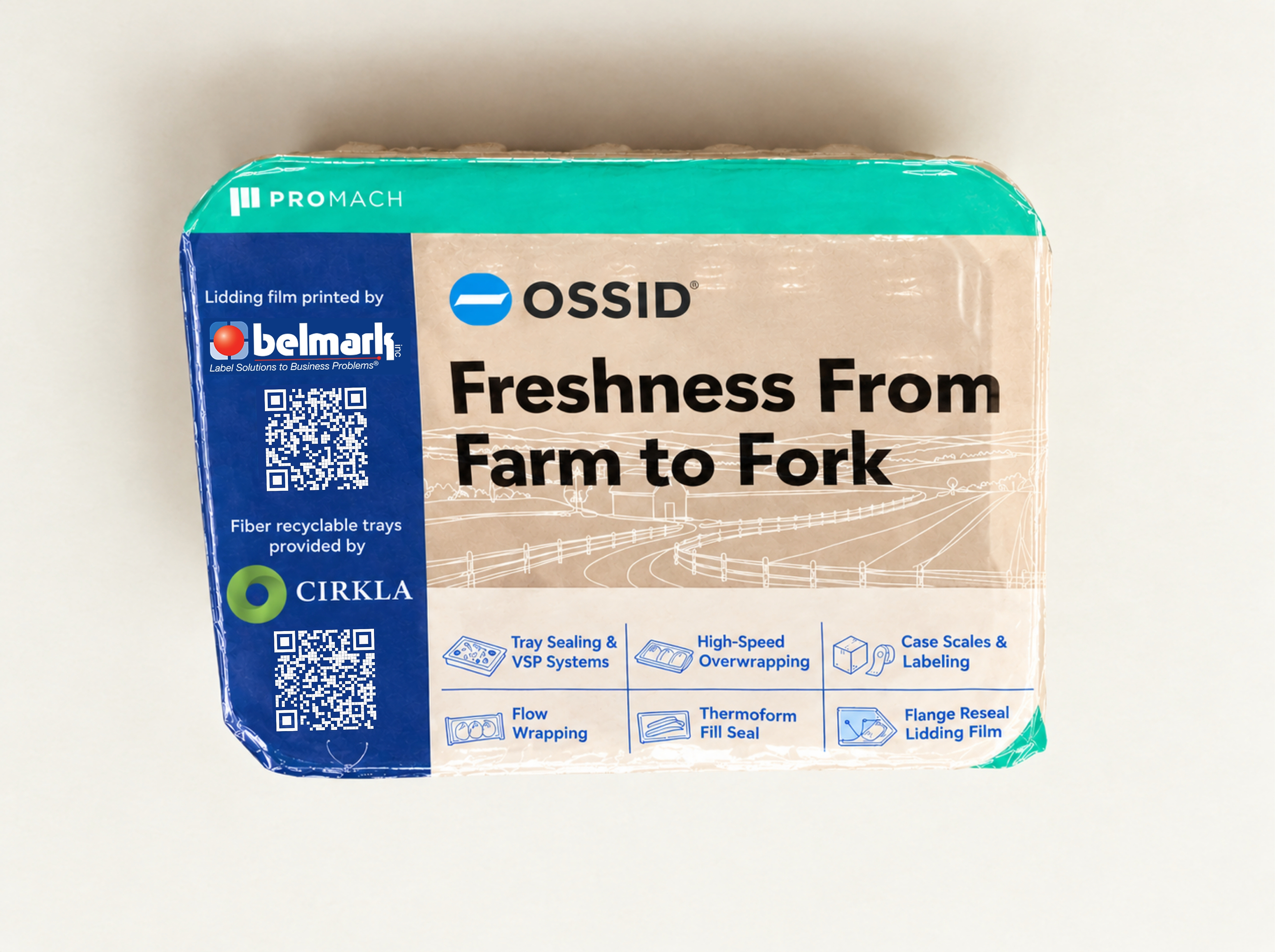
Three packaging specialists have cracked a problem the industry has chased for years: bonding a peel/reseal lidding film to a fiber tray without damaging the tray's liner. Cirkla, Belmark, and Ossid debuted the integrated solution at The Global Produce and Floral Show in Orlando (October 14–16, 2026) and are following up at Pack Expo in Chicago (October 18–21, 2026).
The system targets fresh protein, produce, and ready-meal packing lines — exactly the categories where food processors and commissary operators are under the most pressure to cut single-use plastic. Cirkla claims its molded fiber trays reduce plastic waste by up to 90% versus conventional rigid plastic, while meeting or beating plastic on shelf life, barrier properties, and durability. The trays are validated on all major tray sealers in the U.S. market — including Ossid equipment — with no capital investment or line changes required, which lowers the adoption barrier considerably for operators already running plastic tray lines.
The Sealing Equipment
Ossid, the North American distributor of Reepack and a ProMach product brand, supplies the automated sealing technology through its ReeMaster NextGen Automatic Tray Sealer. The machine is purpose-built for medium to large-scale production and features servo-driven indexing conveyors with side grippers for precise tray positioning, a stainless steel open-frame washdown-ready design, and tool-free cleaning and maintenance access. A 12-inch color touchscreen with recipe management supports changeovers across top-seal, Modified Atmosphere Packaging (MAP), and Vacuum Skin Packaging (VSP) formats — giving commissary and case-ready operations the flexibility to run multiple SKUs on a single line.
Belmark, a lidding film specialist with nearly 50 years in pressure-sensitive and flexible packaging, contributed the film technology that makes peel/reseal adhesion to a fiber substrate work at commercial scale. The technical challenge — maintaining bond integrity without compromising the tray liner — had previously kept resealable functionality confined to rigid plastic formats.
Supply Chain Timeline
Cirkla's first U.S. manufacturing facility in Gainesville, Georgia is scheduled to begin operations in Q1 2027, giving domestic processors and cold chain and storage operators a near-shore supply option. The company already has manufacturing in India and reports commercial validation with some of the largest U.S. retailers and protein processors, though specific customers were not disclosed.
"When you convert a single-use tray into a resealable, multi-use package without compromising performance, cost, or asking brands to change their lines — you remove every reason not to switch," said Glenn Divers, Vice President of Sales, Cirkla.
For foodservice equipment specifiers and packaging-adjacent kitchen designers working on commissary or ghost-kitchen buildouts, the plug-and-play compatibility claim is significant: the fiber tray system is designed to drop into existing tray sealer lines, meaning operators replacing plastic trays in a case-ready or sous vide program would not need to re-specify sealing equipment. As sustainability mandates tighten across retail and foodservice channels, a resealable fiber format that runs on installed equipment could accelerate plastic-tray displacement well ahead of regulatory deadlines.
Written by Michael Politz, Author of Guide to Restaurant Success: The Proven Process for Starting Any Restaurant Business From Scratch to Success (ISBN: 978-1-119-66896-1), Founder of Food & Beverage Magazine, the leading online magazine and resource in the industry. Designer of the Bluetooth logo and recognized in Entrepreneur Magazine's "Top 40 Under 40" for founding American Wholesale Floral, Politz is also the Co-founder of the Proof Awards and the CPG Awards and a partner in numerous consumer brands across the food and beverage sector.