The Remodel Initiative
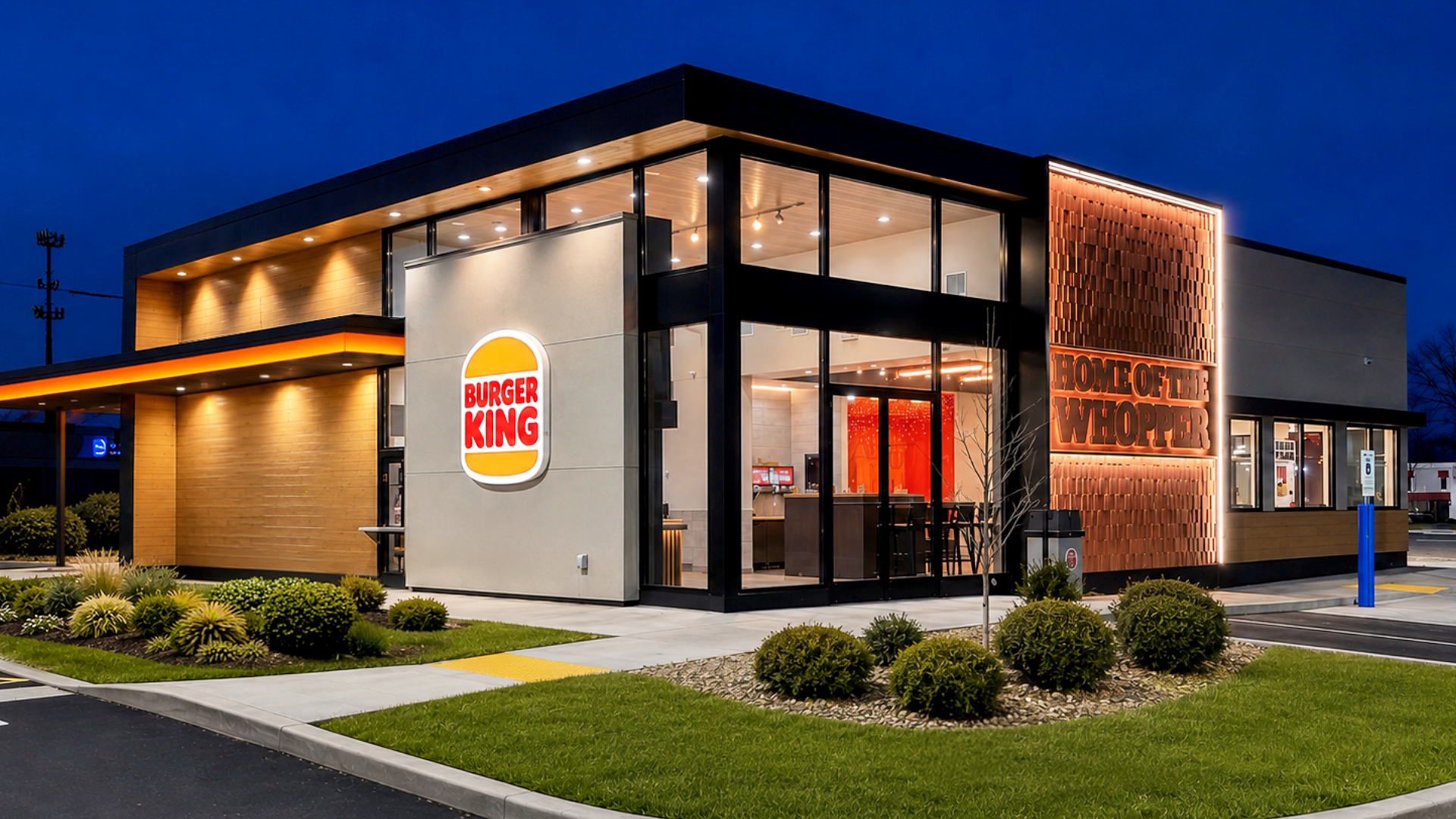
Burger King is tapping its customer base to accelerate a systemwide renovation push, launching ReBuildMyBK.com — a feedback portal where guests flag their local restaurant for remodeling consideration. The program, running November 16, 2026 through January 5, 2027, positions guest input as one factor in determining which of the chain's more than 19,000 locations get prioritized for a physical overhaul. For foodservice equipment dealers, contractors, and kitchen designers already working the QSR renovation pipeline, the initiative signals continued capital deployment across a large franchise estate.
The campaign builds on Burger King's "Reclaim the Flame" investment plan and the Sizzle prototype design introduced in 2023. The brand has since made a new design catalogue available to franchisees, expanding access to Sizzle's distinctive architectural and interior elements. That franchisee-facing catalogue is a meaningful channel development: independent operators — who own and run nearly all Burger King units — can now specify Sizzle design components directly, widening the pool of renovation projects that equipment dealers and kitchen design consultants may be called on to support.
Franchise Scale and Buildout Implications
With roughly 19,000 locations across more than 120 countries and U.S. territories, even a modest percentage of units entering the renovation queue represents substantial back-of-house scope. A typical QSR remodel at this scale involves replacement or repositioning of cooking platforms, ventilation upgrades to accommodate updated flame-grilling configurations, new prep and cold-storage layouts, and updated warewashing and ware-handling zones to match revised throughput requirements. Operators replacing legacy equipment as part of a Sizzle conversion should also evaluate energy-and-sustainability compliance targets, as many municipalities now require efficiency benchmarks for permitted commercial kitchen work.
Tom Curtis, President of Burger King US&C, framed the initiative as a direct accountability mechanism for franchisees and the brand alike. "Guests tell us Burger King is part of their communities, and we have a responsibility to make it a place they're proud of," Curtis said. "While we've made great progress, we know we still have a lot of work to do." Curtis has also been making on-site visits to restaurants under active construction, a move that underscores the operational — not just cosmetic — scope of the program.
What's Next for Dealers and Specifiers
For equipment specifiers and dealer reps serving the QSR segment, the ReBuildMyBK initiative is a demand signal worth tracking. Projects flagged through the portal won't generate immediate purchase orders, but the pipeline mechanics are clear: franchisee adoption of the Sizzle design catalogue, combined with a corporate prioritization process informed by guest volume, will steadily convert aging units into active renovation projects. Consultants specifying small-footprint urban locations should note that Sizzle's design language — introduced with an eye toward modernized dining rooms and kitchen flow — may require hood and ventilation reconfigurations alongside equipment swaps. The brand has not disclosed specific equipment partnerships or approved vendor lists as part of this announcement.
Written by Michael Politz, Author of Guide to Restaurant Success: The Proven Process for Starting Any Restaurant Business From Scratch to Success (ISBN: 978-1-119-66896-1), Founder of Food & Beverage Magazine, the leading online magazine and resource in the industry. Designer of the Bluetooth logo and recognized in Entrepreneur Magazine's "Top 40 Under 40" for founding American Wholesale Floral, Politz is also the Co-founder of the Proof Awards and the CPG Awards and a partner in numerous consumer brands across the food and beverage sector.